My First Olympic Triathlon: TRI HARD Rotterdam, 21 June 2026
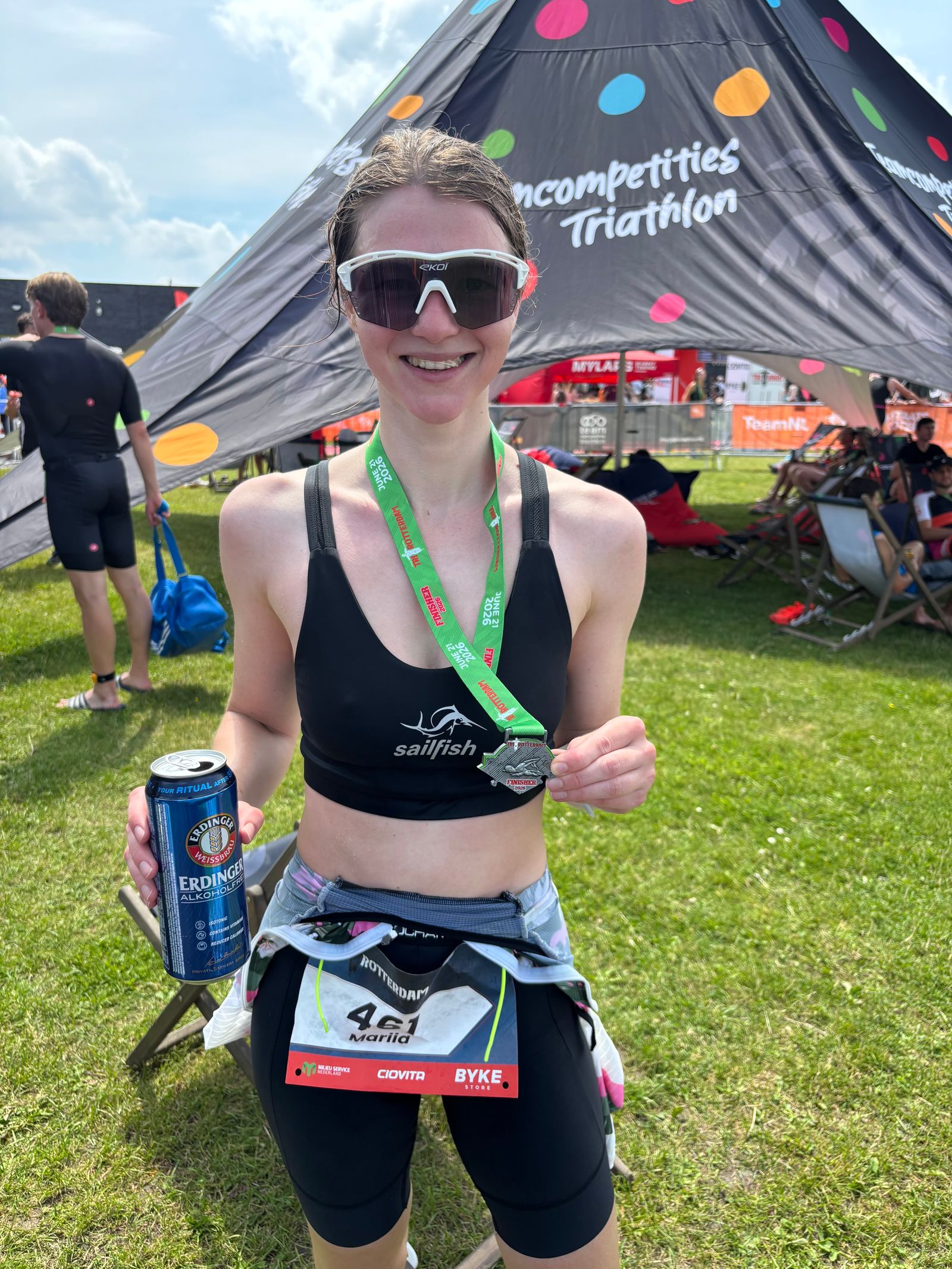
Some races you remember for the medal. Others you remember for what they proved to you. This one was the latter.
On 21 June 2026, I completed my first Olympic-distance triathlon at the TRI HARD event in Rotterdam — 1.5 km swim, 40 km bike, 10 km run, finished in 3:27:59. It wasn’t a great time, but it was an important step: three weeks later, I’d be lining up for my first Ironman 70.3 in Luxembourg, and this race gave me the confidence that I could actually do it.
The Day Before: Arriving in Rotterdam
We drove down from Luxembourg the day before, checked into the hotel (a nice bicycle friendly place located conveniently close to the city center), and spent the afternoon exploring Rotterdam a bit — just enough to stretch the legs and clear the head before race day.
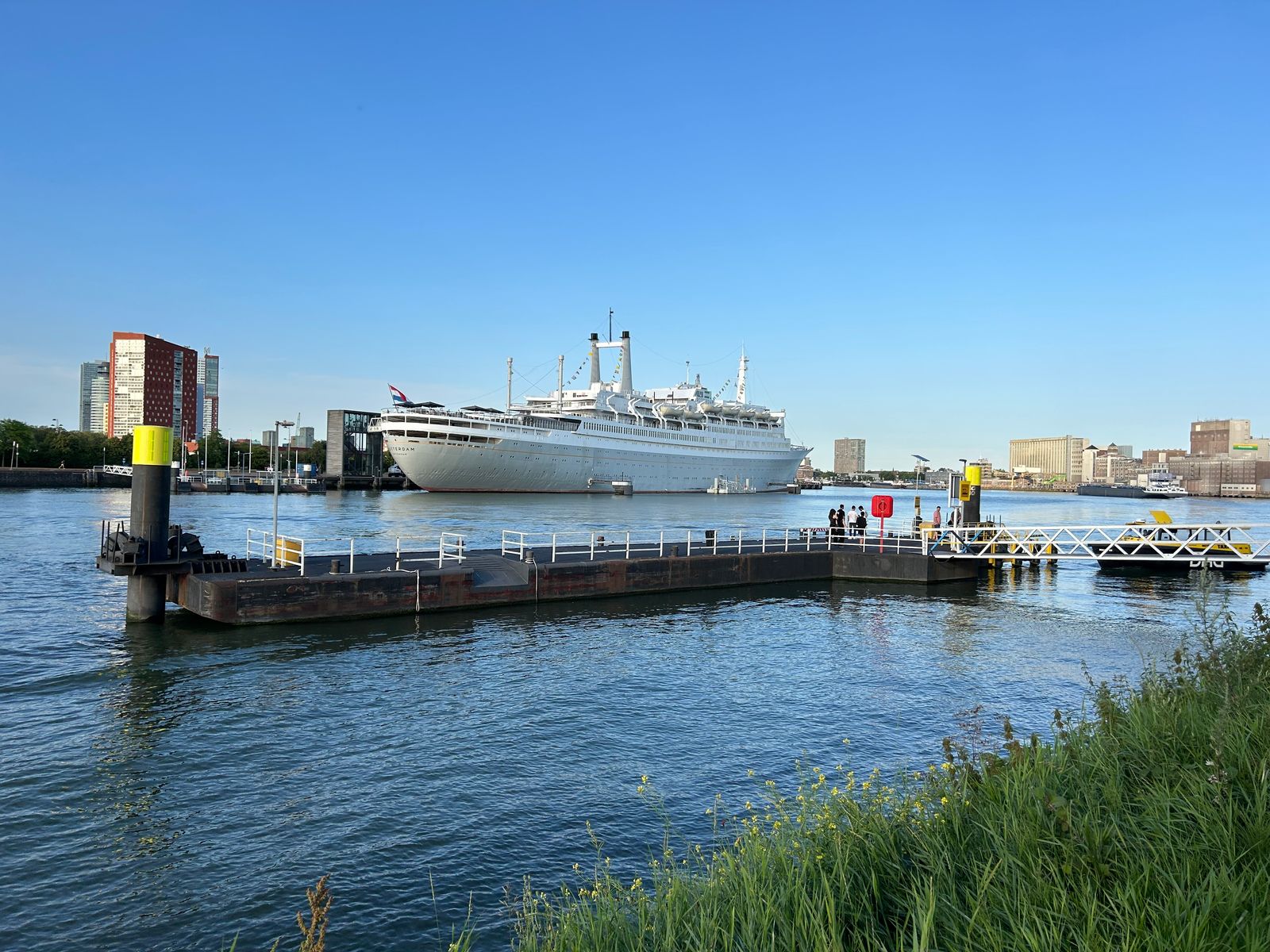
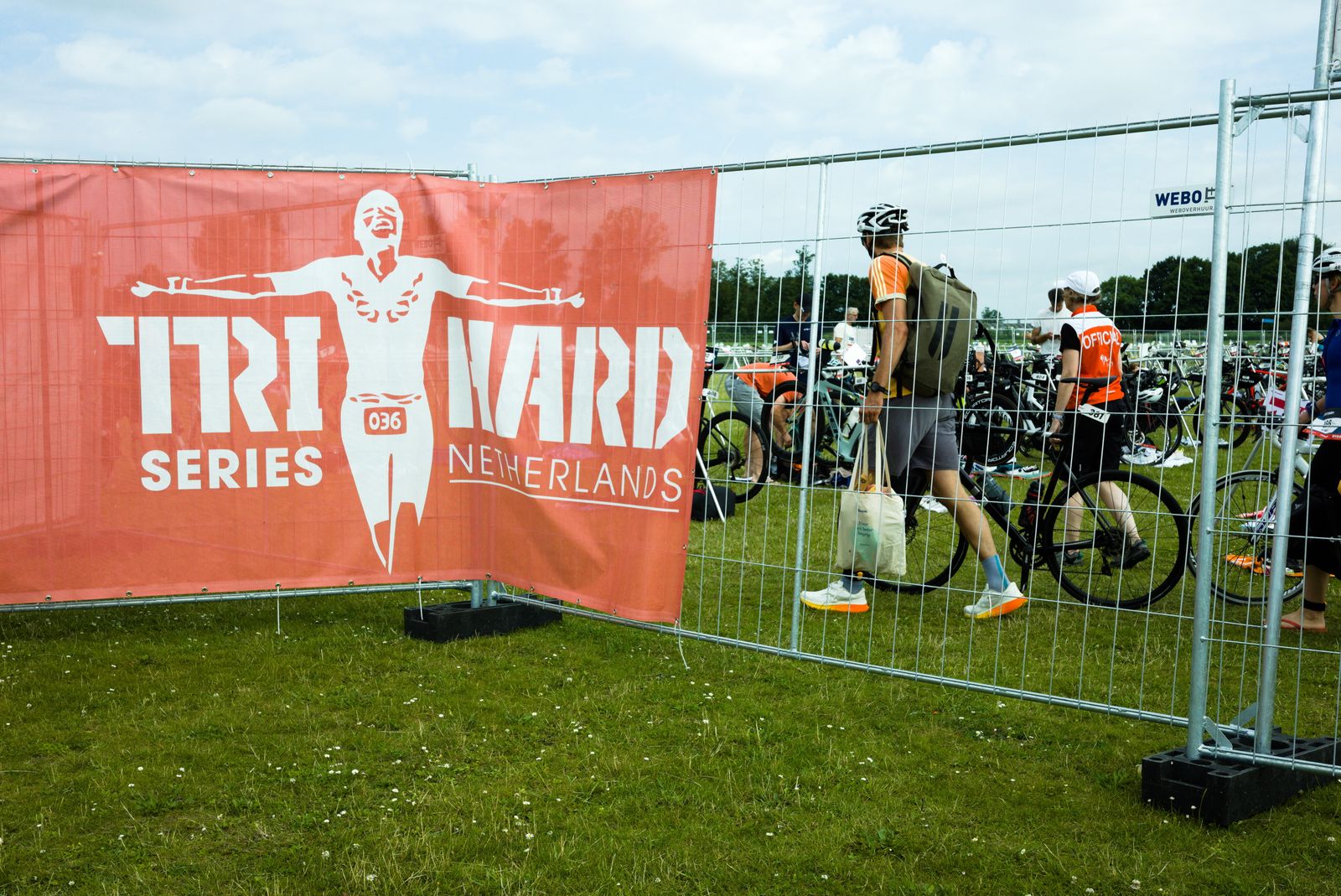
The venue, the Willem-Alexander Rowing Course in Zevenhuizen (just outside Rotterdam), was about 20 minutes from the city center, so staying in Rotterdam worked well for us. The event allowed race-day registration, so there was no need to queue the day before — that flexibility was useful, since it let us keep the pre-race day relaxed.
Race Morning: Registration and Nerves
I woke up early, had a nice breakfast at the hotel, and drove to the venue for registration. Everything was fast and efficient — checked in, got my race number and timing chip, and headed to transition.
I registered about 1.5 hours before my swim start, which turned out to be the perfect amount of time. It gave me enough space to lay out my gear in transition, walk the course once, and calm my nerves down without feeling rushed.
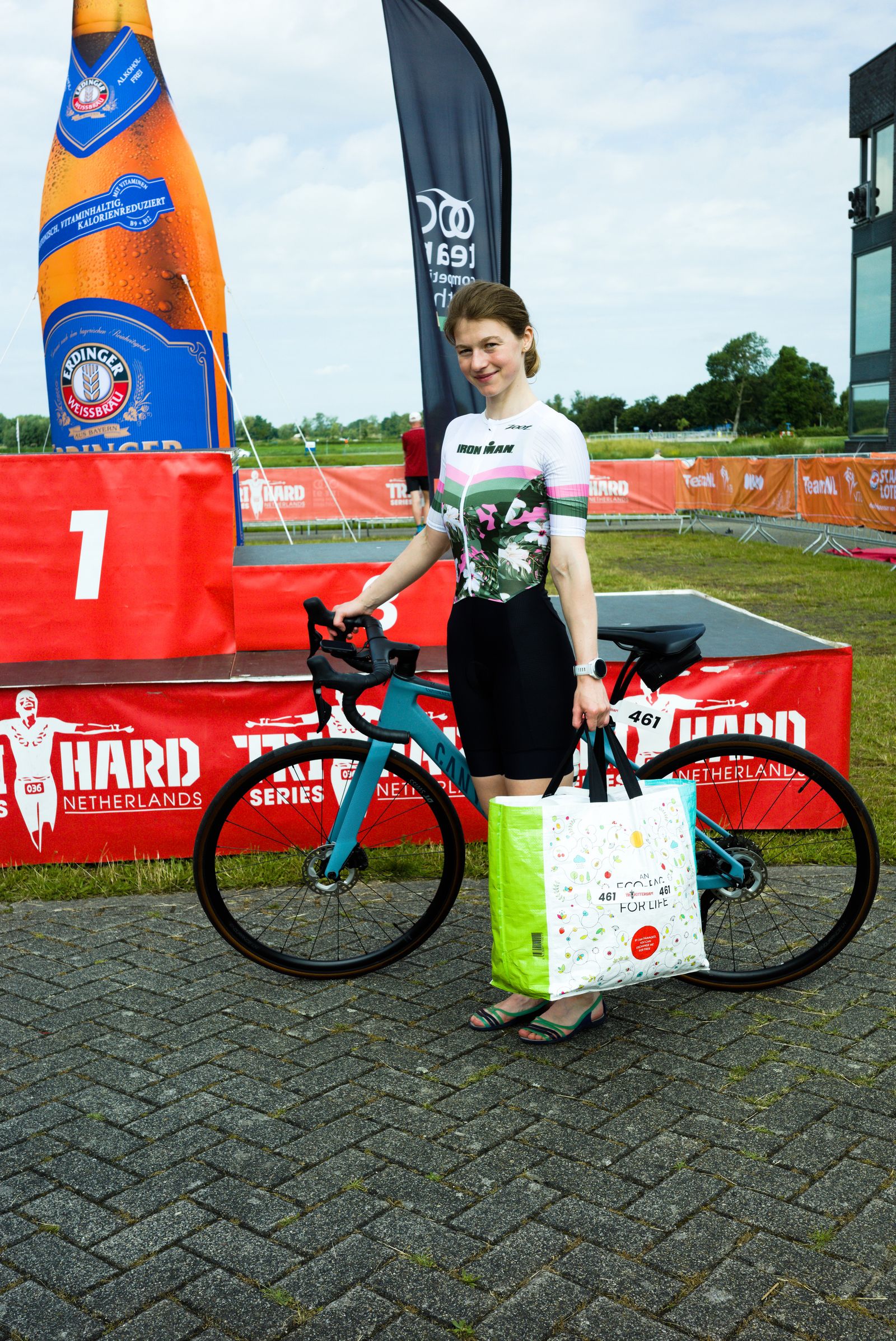
The forecast had been brutal: 30+ degrees Celsius on race day, with the swim starting at 11:00. By the time we got there, the water temperature was sitting around 26–27 degrees — warm enough that wetsuits were optional, and for most of us, not worn. That was a first for me: my first open-water swim without a wetsuit, in a heatwave.
The Swim: 1.5 km in 36 Minutes
The swim took place in a reservoir/channel at the rowing course — calm, flat water, no currents, which was ideal for a first Olympic-distance open-water swim. I was nervous about sighting and navigation, but it went surprisingly well.
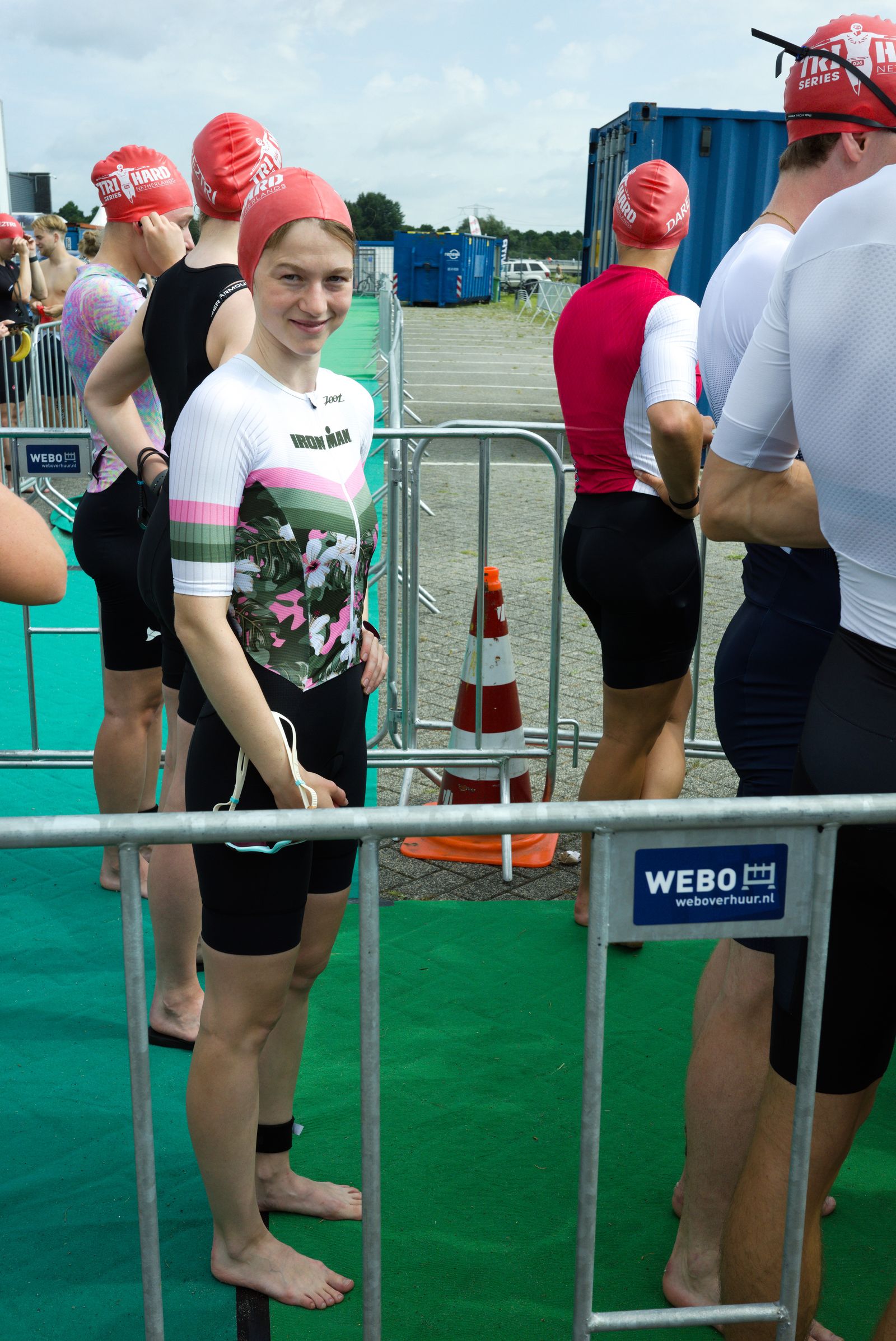
Split: 36 minutes (2:25 min/100m)
That’s faster than I expected, and it felt controlled throughout. No panic, no major contact with other swimmers, and I managed to sight well enough to stay on course. Coming out of the water, I felt good — maybe even a bit too good, since I hadn’t burned as much energy as I’d feared.
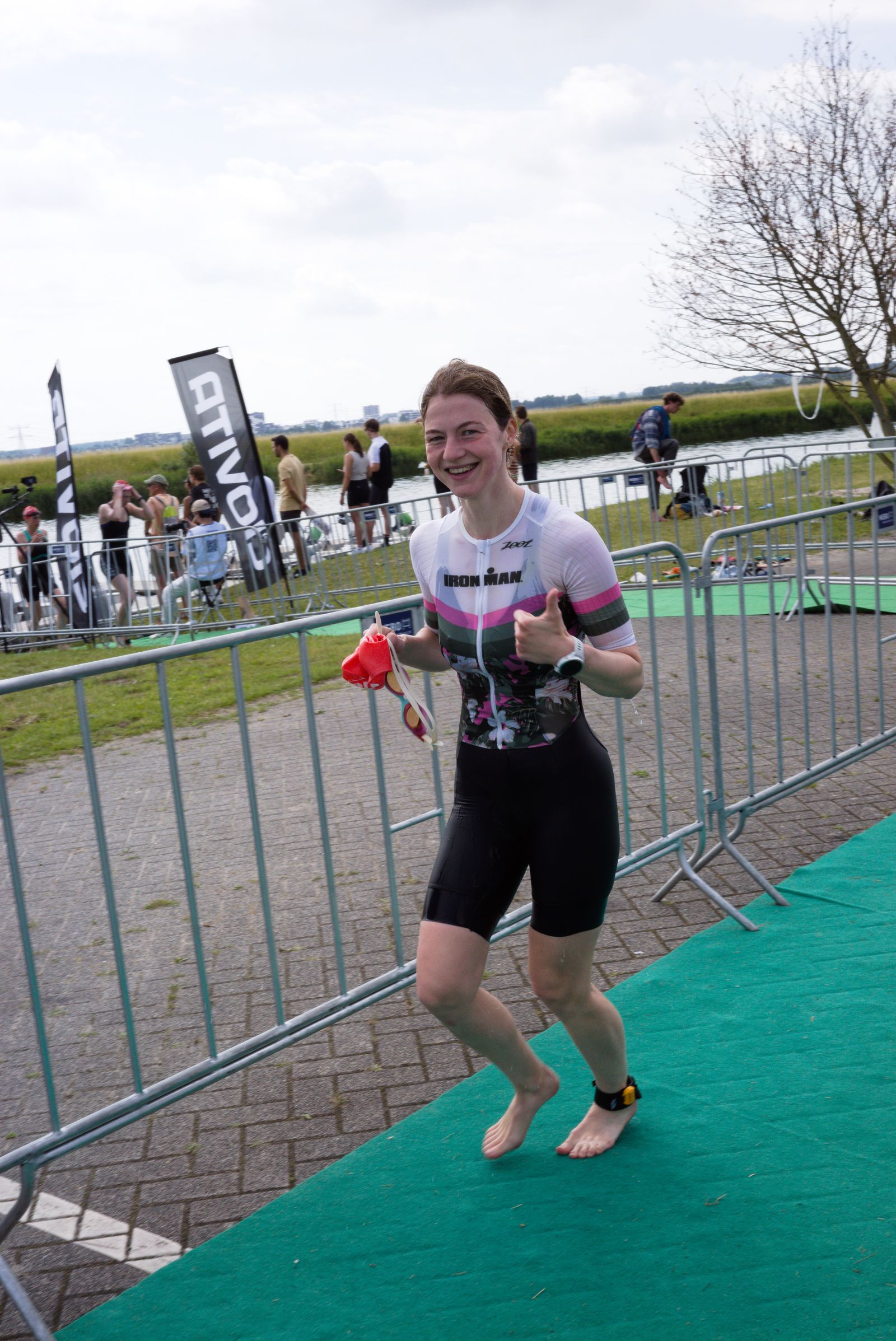
Transition 1: 9 Minutes (Too Long)
T1: 9 minutes
This one stings to look back on. I don’t even remember what I was doing for nine minutes — trying to reapply sunscreen, fumbling with my shoes, probably overthinking things. In hindsight, I lost a lot of time here, and it’s the easiest thing to fix next time: practice transitions, know exactly what you’re doing before you get out of the water, and move.
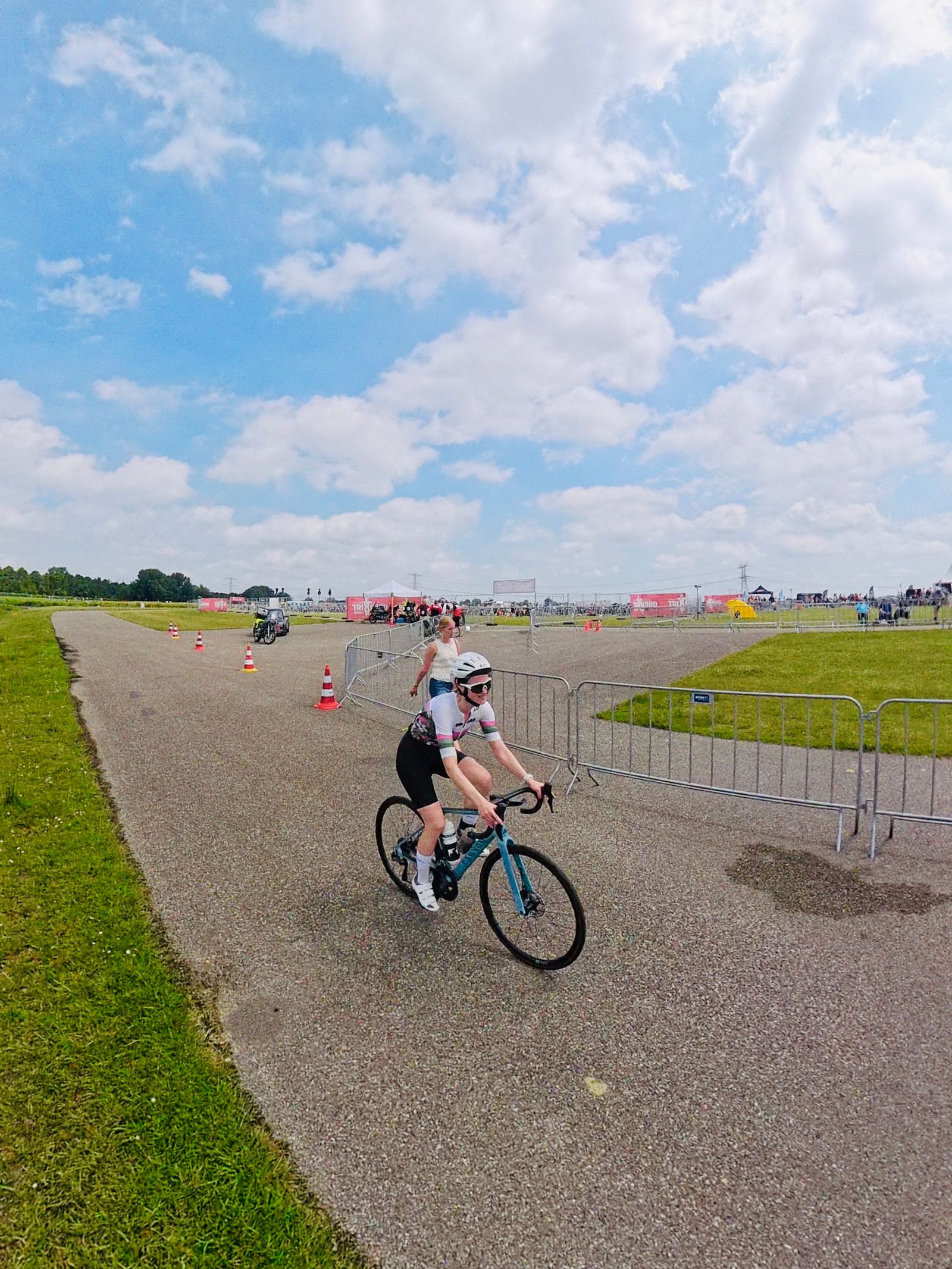
The Bike: 40 km in 1:30
The bike course was a few loops around small lakes and channels — flat, fast, no major climbs, which suited my strengths. I averaged 27.8 km/h over the 40 km, finishing in about 1 hour 30 minutes.
It felt steady throughout — not easy, but manageable. I drank water and took a gel or two, but looking back, I probably didn’t eat enough on the bike. That would catch up with me on the run.
Transition 2: 5 Minutes
T2: 5 minutes
Better than T1, but still not great. Swapped cycling shoes for running shoes, put my cycling gear in the bag, grabbed my race belt, and headed out. Five minutes is acceptable for a first time, but there’s time to shave off here too with better organization.
The Run: 10 km in 1:05, Heat and Side Stitches
The run was hard. Really hard. It was now well above 32–33 degrees, with no shade on the course. Volunteers were amazing — handing out extra water cups, setting up makeshift showers along the route — but the heat was relentless.
About 3 km in, I started getting side stitches on my left side. I think it was because I hadn’t eaten enough on the bike, then tried to compensate by eating more right before the run — classic mistake. The stitches never fully went away, and I spent most of the run managing pain and pacing rather than pushing.
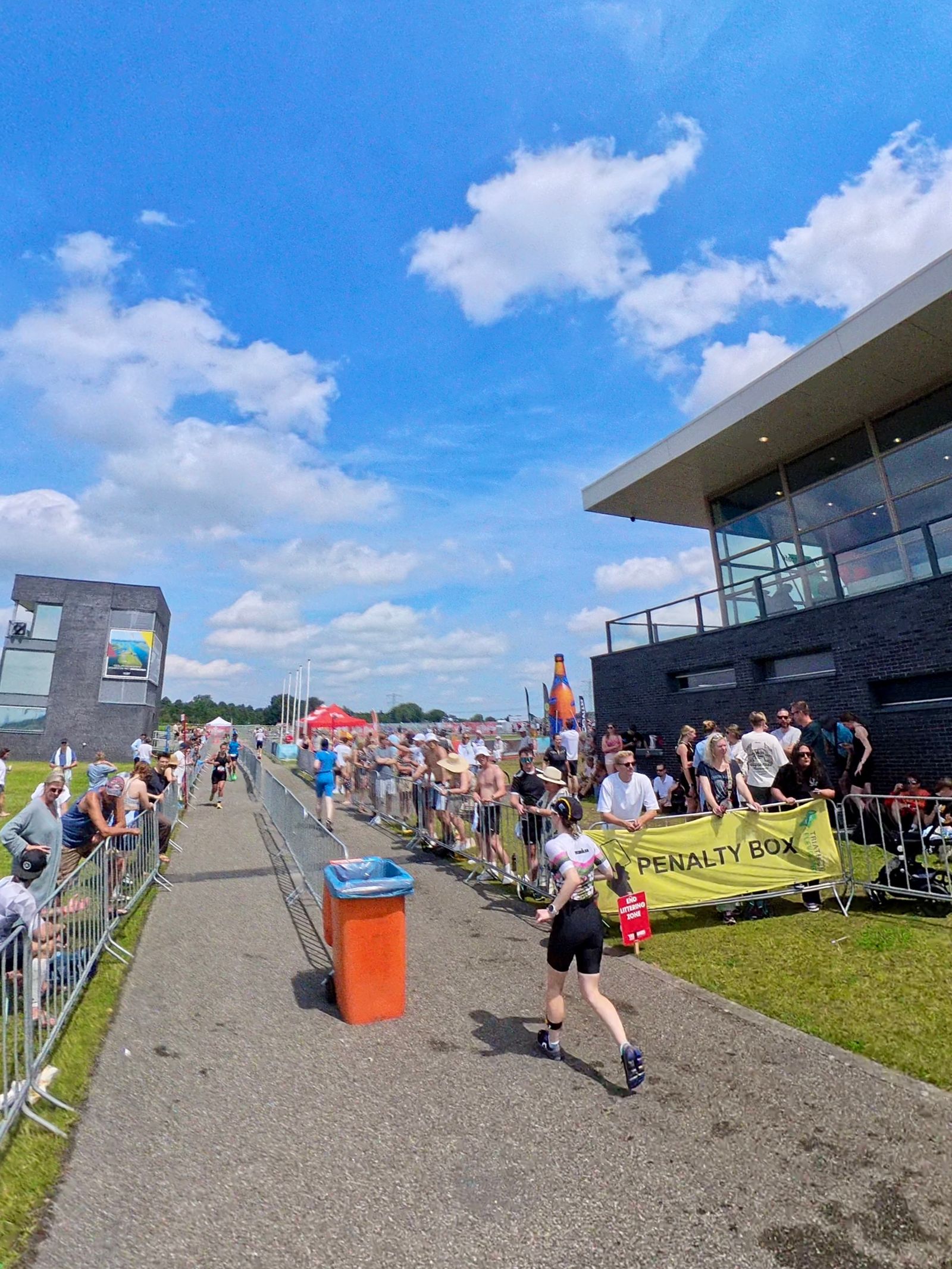
Split: 1 hour 5 minutes (6:35 min/km pace)
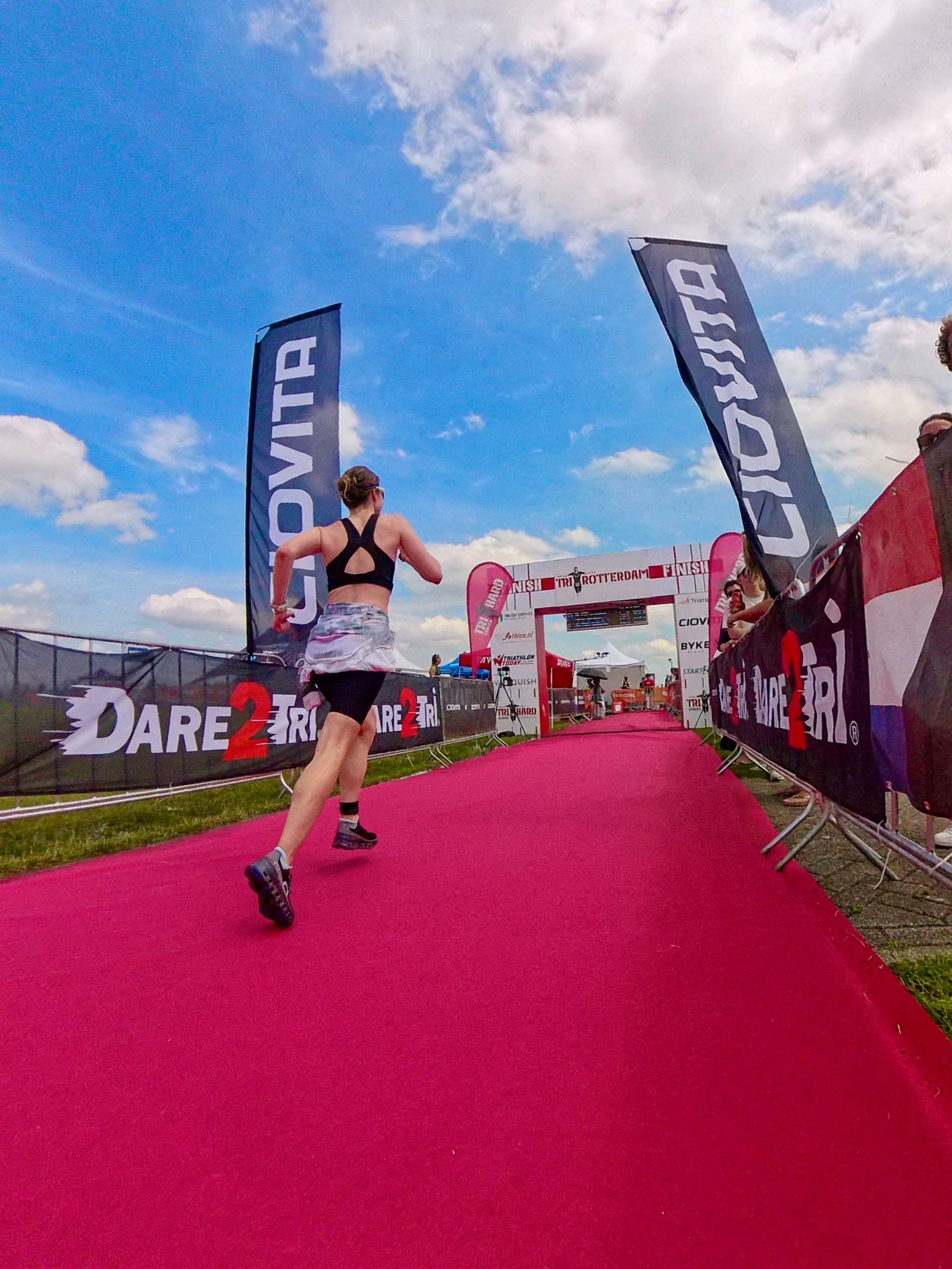
I finished, but it was a grind. The last 2 km felt endless, and I was genuinely relieved to see the finish line.
The Finish: 3:27:59
Official total time: 3 hours 27 minutes 59 seconds
For a first Olympic triathlon, in a heatwave, with no wetsuit and a rough run — I’ll take it. It’s not a time I’d chase again, but it proved something important: I could complete the full distance, swim in open water, and keep moving even when things got uncomfortable.
After the Race: Showers and Relief
The venue had proper, clean showers and changing rooms, which was a huge relief in that heat. I didn’t bring fresh clothes with me (next time I will), so I showered, dried off, put my wetsuit back on over my still-damp skin (yes, really), and changed into normal clothes in the car once we got back to the hotel.
It felt great to be done — proud, exhausted, and already thinking about what I’d do differently next time.
What I Learned
- Eat enough on the bike. The side stitches on the run were almost certainly from under-fueling on the bike and overcompensating right before T2.
- Practice transitions. Nine minutes in T1 is unacceptable — that’s nine minutes I could’ve used on the run.
- Bring fresh clothes. Showering and re-wearing damp race gear is not a strategy.
- Heat is a separate discipline. Racing in 30+ degrees is different from training in it — you need to adjust expectations and pacing accordingly.
- Open water without a wetsuit is manageable. I was more nervous about this than I needed to be. Calm water and good sighting made it fine.
Why This Mattered
Three weeks after this race, I’d be lining up for my first Ironman 70.3 in Luxembourg. This Olympic distance was the confidence-builder I needed — proof that I could handle the swim, manage transitions, and finish a full race even when conditions weren’t ideal.
It wasn’t perfect, but it was a step. And sometimes, that’s enough.