My First Ironman 70.3: Luxembourg Remich, 12 July 2026
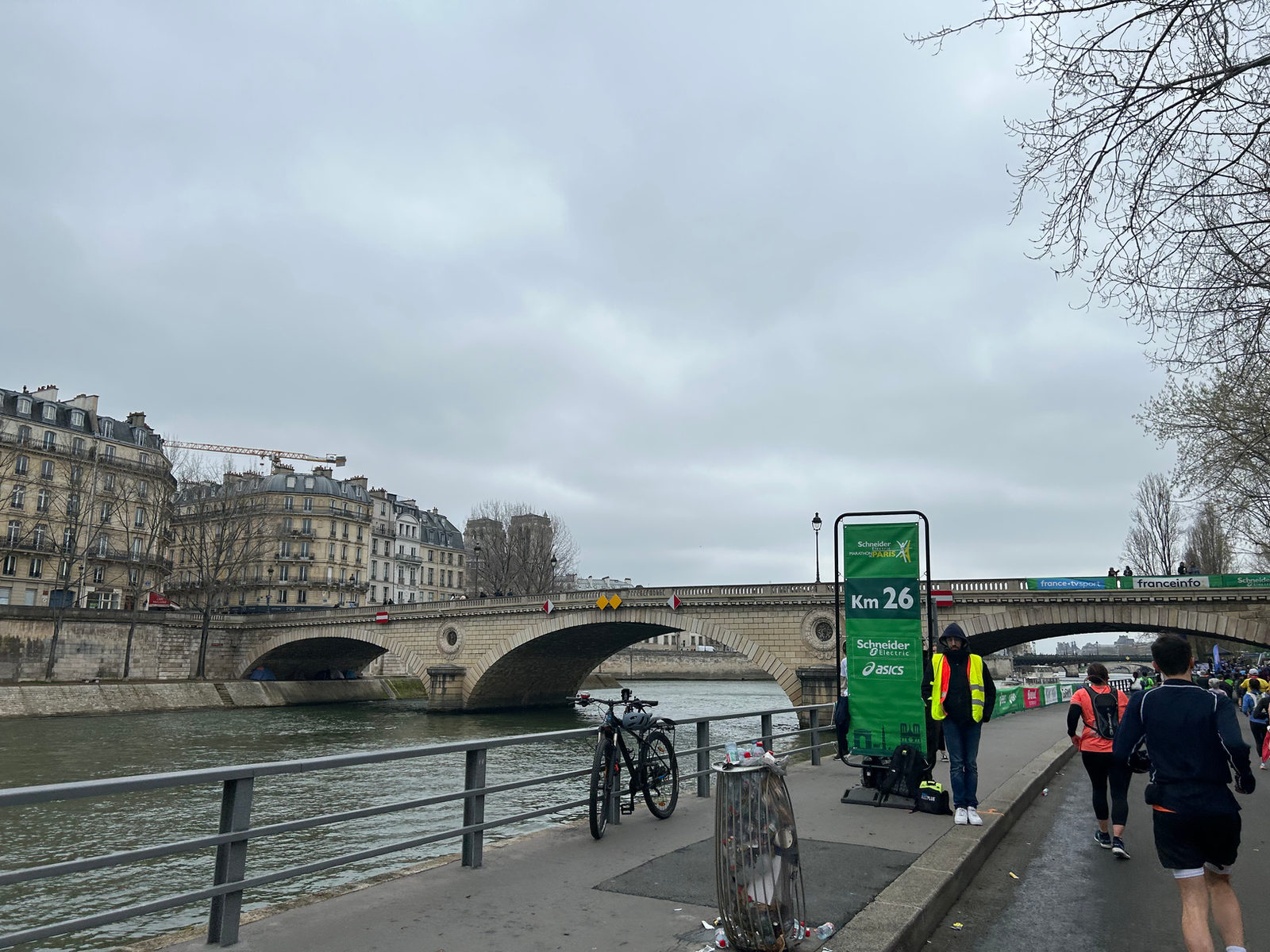
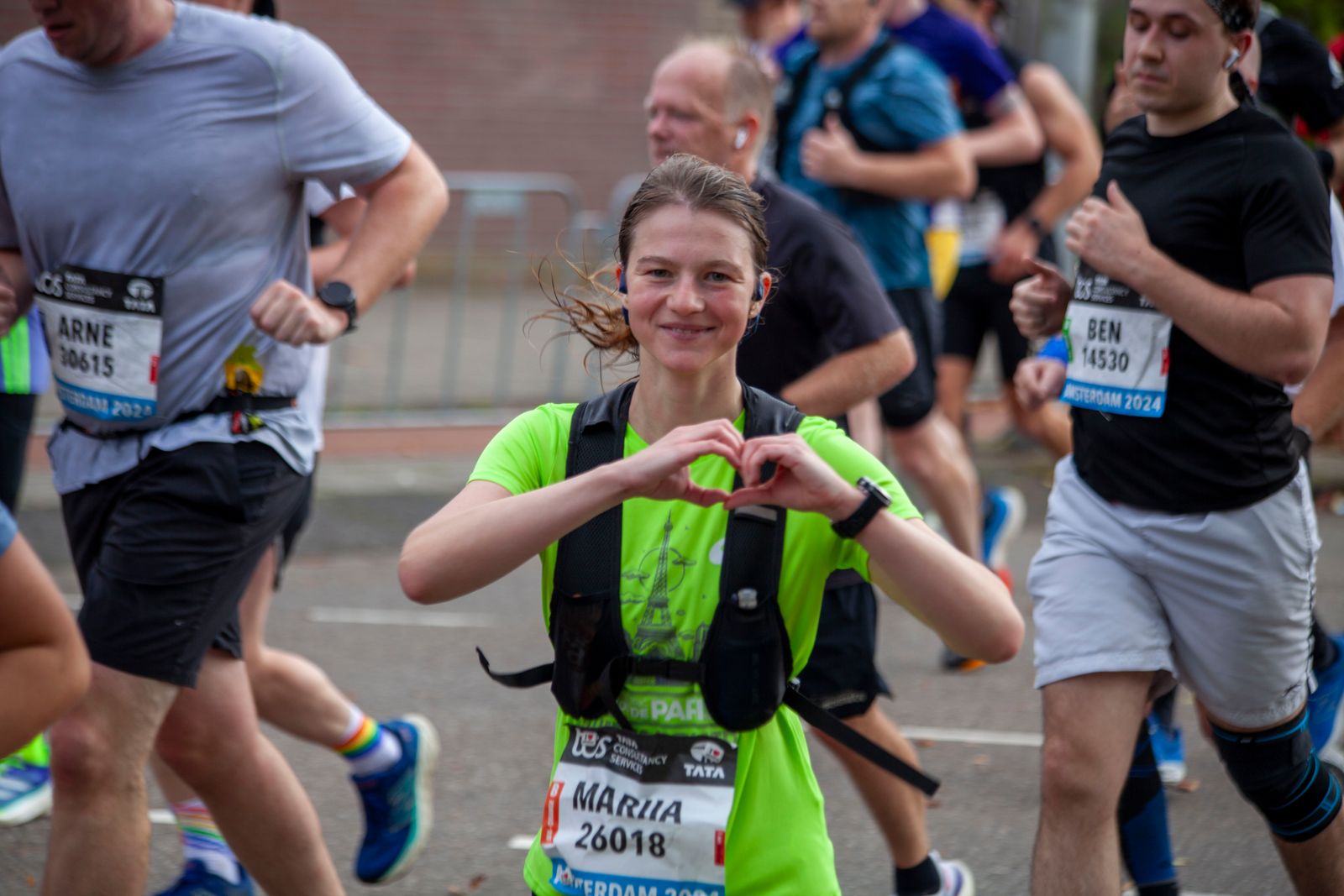
My journey into endurance sport started with running: I ran my first marathon in Paphos in 2018, and then after almost 4 years break from running did 5 full marathons (2 in Amsterdam and 3 in Paris). Running taught me a lot about pacing, patience, and continuing through difficult moments. But a 70.3 was a different kind of challenge: it combined swimming, cycling, and running, with nutrition, transitions, and pacing to manage across the whole day.
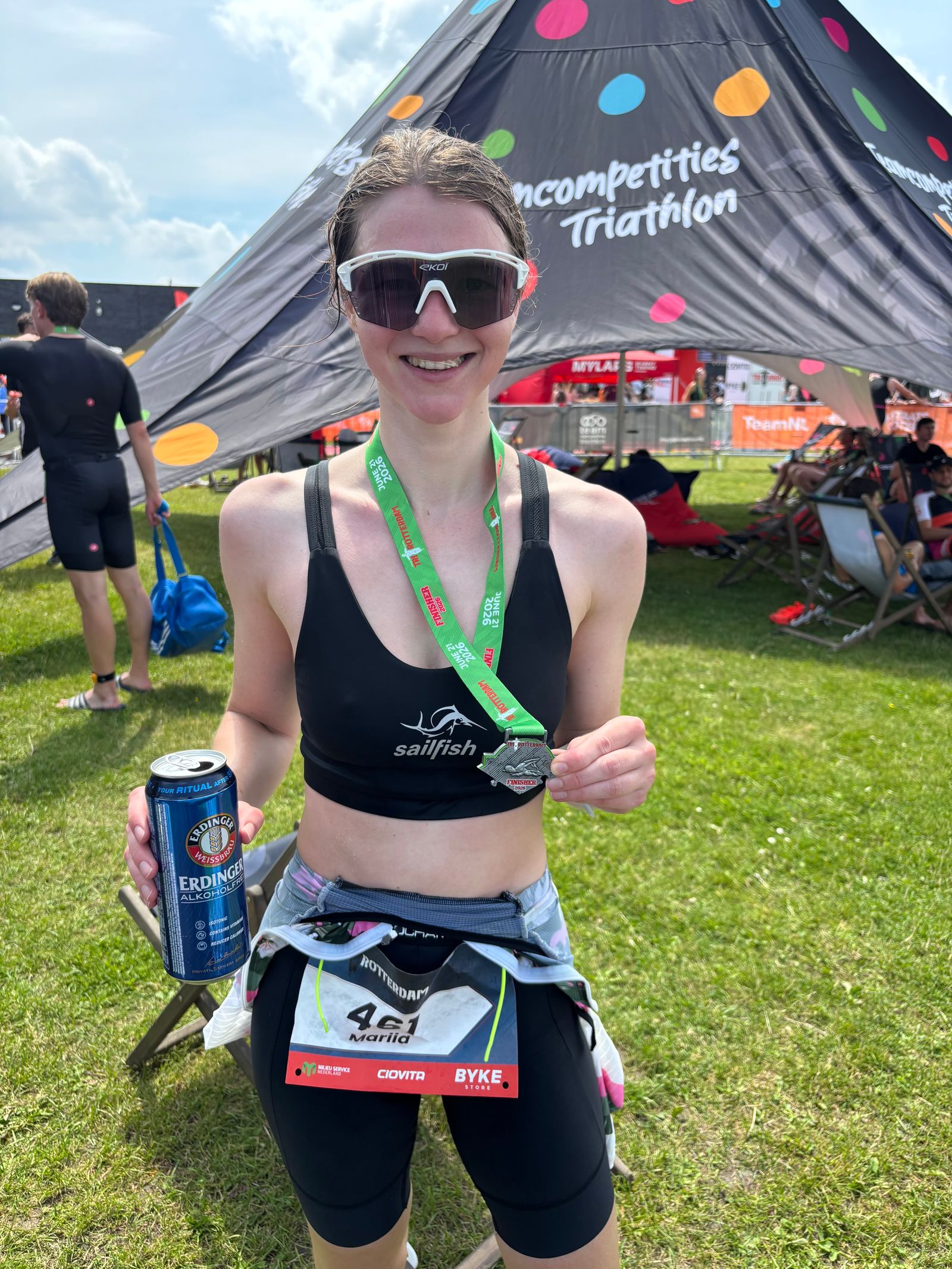
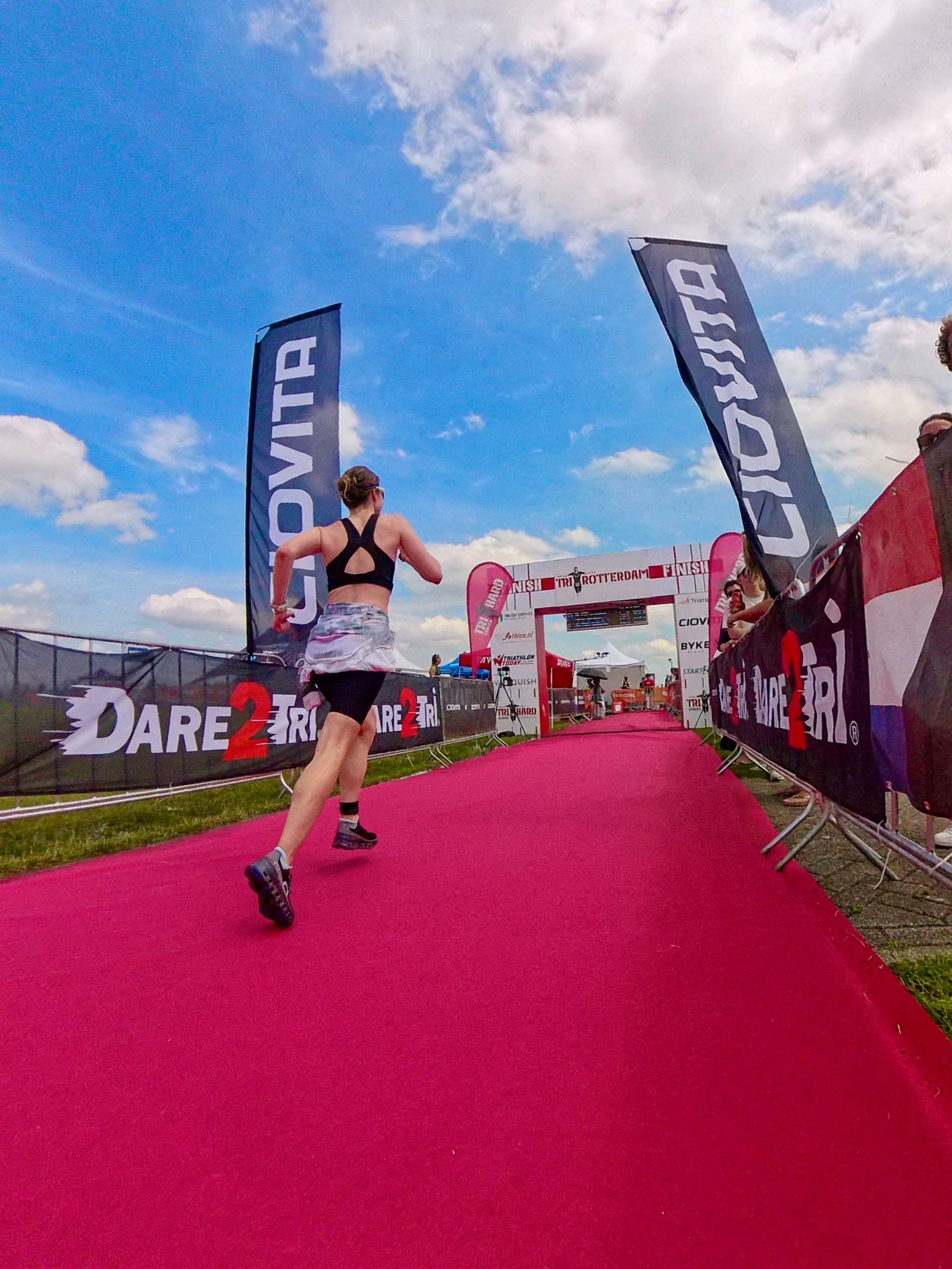
If you haven’t read it yet, I wrote about how I moved from running into triathlon in My Way to Triathlon: From a Siberian Village to the Start Line. My first Olympic-distance triathlon in Rotterdam, three weeks before this race, was another important step in that journey. I wrote about that race, including my first open-water swim, in My First Olympic Triathlon: TRI HARD Rotterdam.
The Ironman 70.3 in Remich was especially meaningful because it was a home race. I live in Luxembourg City, so there was no hotel to book, no long journey, and no complicated travel logistics. I could prepare in familiar surroundings, sleep in my own bed, and return home after the race. That made the event feel convenient — but it didn’t make the distance any less intimidating.
A 70.3 consists of a 1.9 km swim, a 90 km bike ride, and a 21.1 km run. I had trained for it, but I still wasn’t sure how I would feel after several hours of effort, especially with a heatwave forecast for race weekend. This was going to be my first real test of whether I was ready to move from Olympic-distance triathlon to the half-Ironman distance.
Preparation for the 70.3
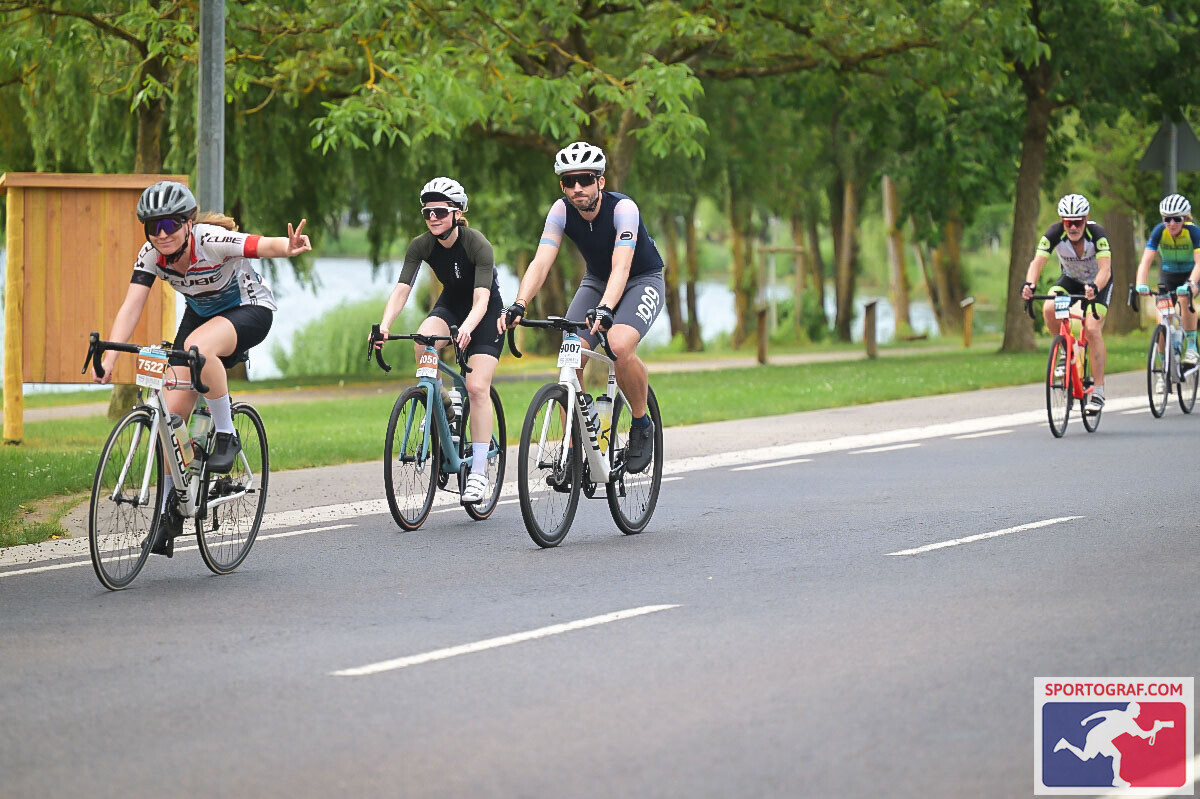
My marathon background helped with the running, especially with pacing and the mental side of spending a long time on tired legs. However, the bike required a different kind of preparation. I had to become comfortable riding for several hours, eating and drinking while cycling, and finishing a long ride without using all my energy before the run even started. I participated in a couple of cycling events before doing a triathlon and it definitely helped.
A marathon is a single long effort. A 70.3 requires you to manage three sports and the transitions between them. Every discipline affects the next one. If you push too hard on the bike, you feel it during the run. If you don’t eat or drink enough early in the race, it becomes much harder to recover later.
The Olympic triathlon in Rotterdam gave me useful practical experience with open-water swimming, transitions, race nutrition, and racing in hot conditions. It also showed me what I still needed to improve — especially transitions and fuelling. My goal for Remich was not to chase an ambitious time. I wanted to stay controlled, complete the distance, and learn from the experience.
Registration and Bike Check-In
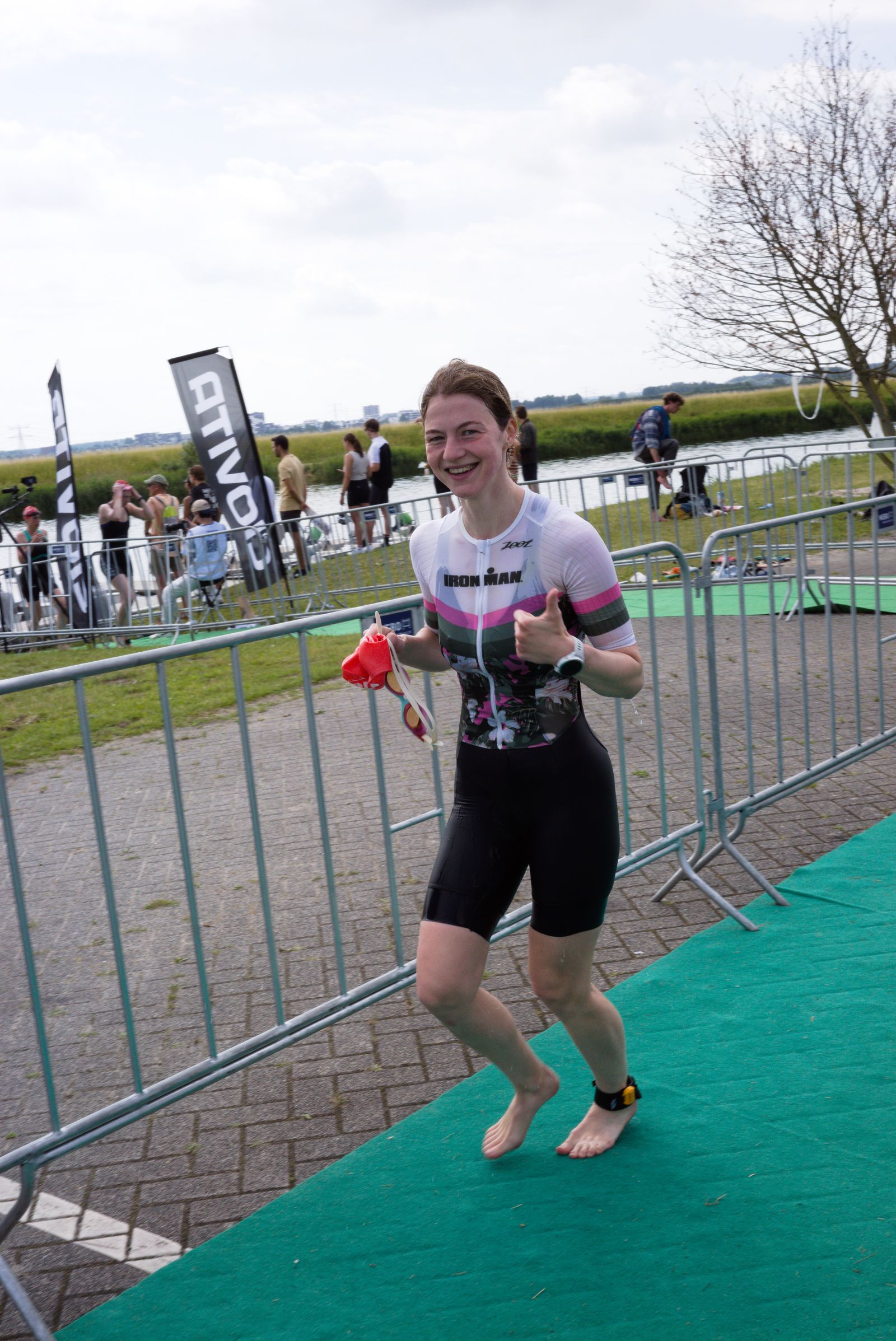
Living in Luxembourg City, I didn’t need to book a hotel or travel far — just a short drive down to Remich on race weekend. That’s one of the best things about home races: you sleep in your own bed, eat your own food, and recover in your own space.
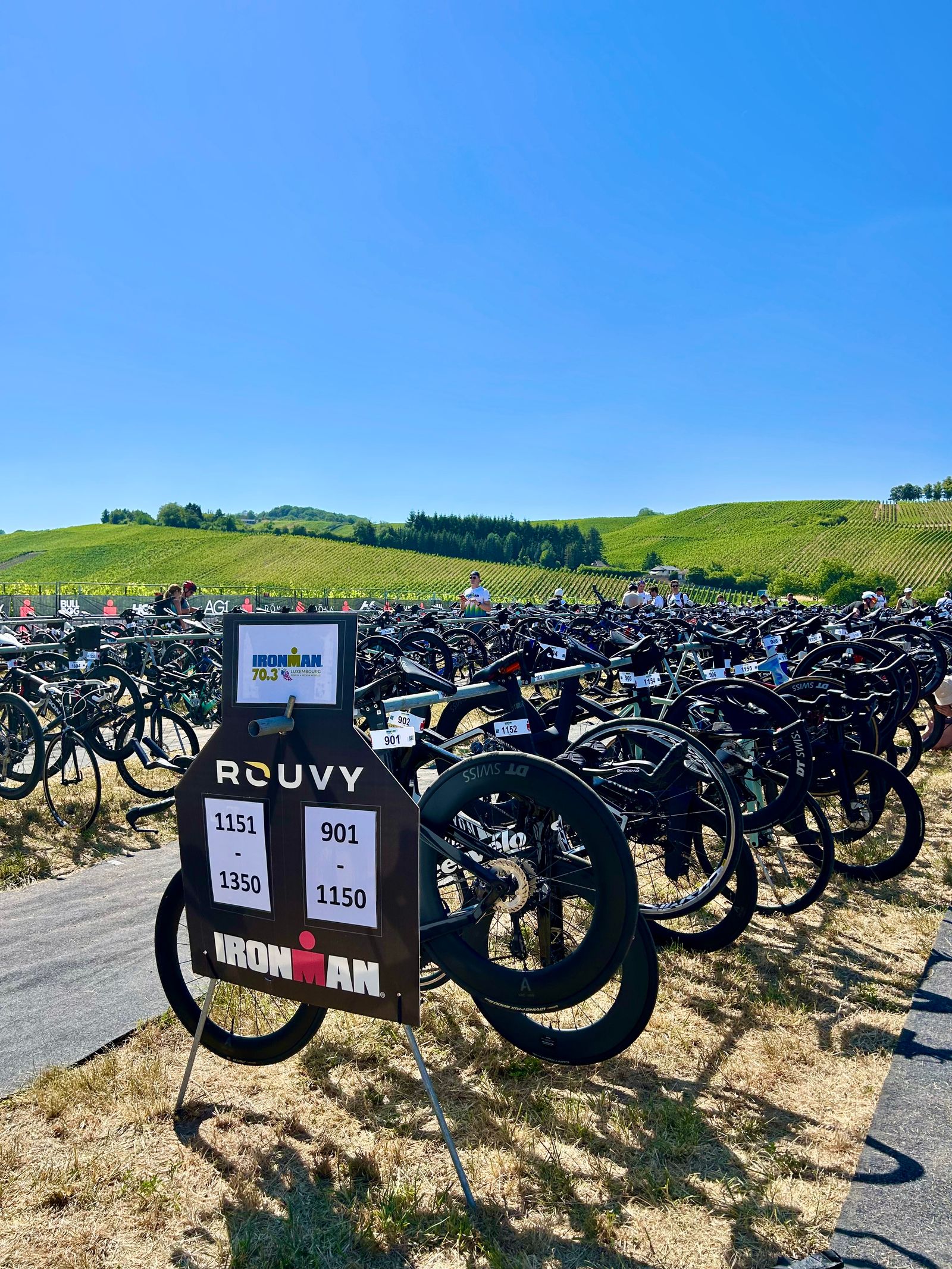
I went to register on Friday afternoon and took the time to enjoy the atmosphere at the event village — seeing other athletes, checking out the expo, and gradually getting into race mode. Saturday afternoon, I dropped off my bike for check-in. Ironman didn’t allow bike check-in on race day itself, although I could have registered on Saturday and avoided the extra trip on Friday. I was short of time on Saturday, so I decided to split it into two trips: Friday for registration and Saturday for bike drop-off.
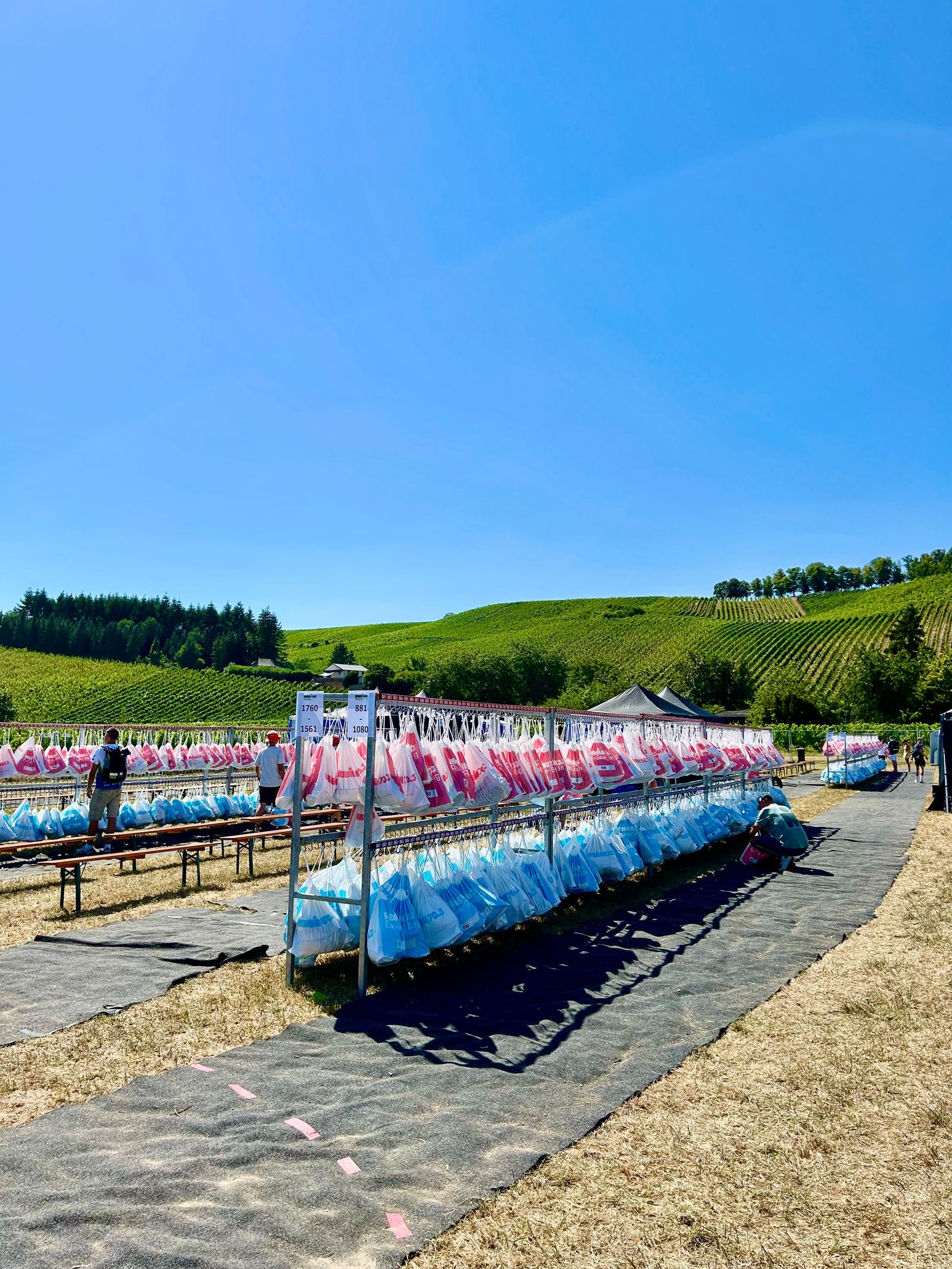
I also had to deposit all my transition bags the day before. Registering on Friday turned out to be useful because I could prepare the bags calmly at home and bring everything exactly as planned. For a first 70.3, that preparation made the logistics feel much less overwhelming.
The Night Before: Nerves and Doubt
The night before race day, I was very nervous. Even though I’d completed an Olympic triathlon just three weeks earlier, I wasn’t sure I was ready for the 70.3 distance. The heatwave was still in full swing, and I genuinely thought I might not be able to finish.
My marathon experience helped me trust the process, but it couldn’t remove the uncertainty completely. I knew how to run a half marathon, but I had never tried to do it after 90 km on the bike in 30-degree heat.
A standalone half marathon was familiar territory. This was different. The cycling, the heat, the nutrition, and the long day ahead all made the distance feel much less predictable.
Race Morning: An Unexpected Change
I woke up early, around 5:30, ate breakfast, and left home at 6:30. By 7:00, I was already in Remich, walking to the event village to drop off my street bag. Being able to start the morning at home made everything simpler: no hotel breakfast logistics, no unfamiliar room, and no long journey before the race even began.
It was already too hot for a wetsuit. When I went to transition to deposit my gels, the organisers announced that the swim had been cancelled because of bacteria in the Moselle. We would have to go to the swim start and then run to transition to begin the cycling leg instead.
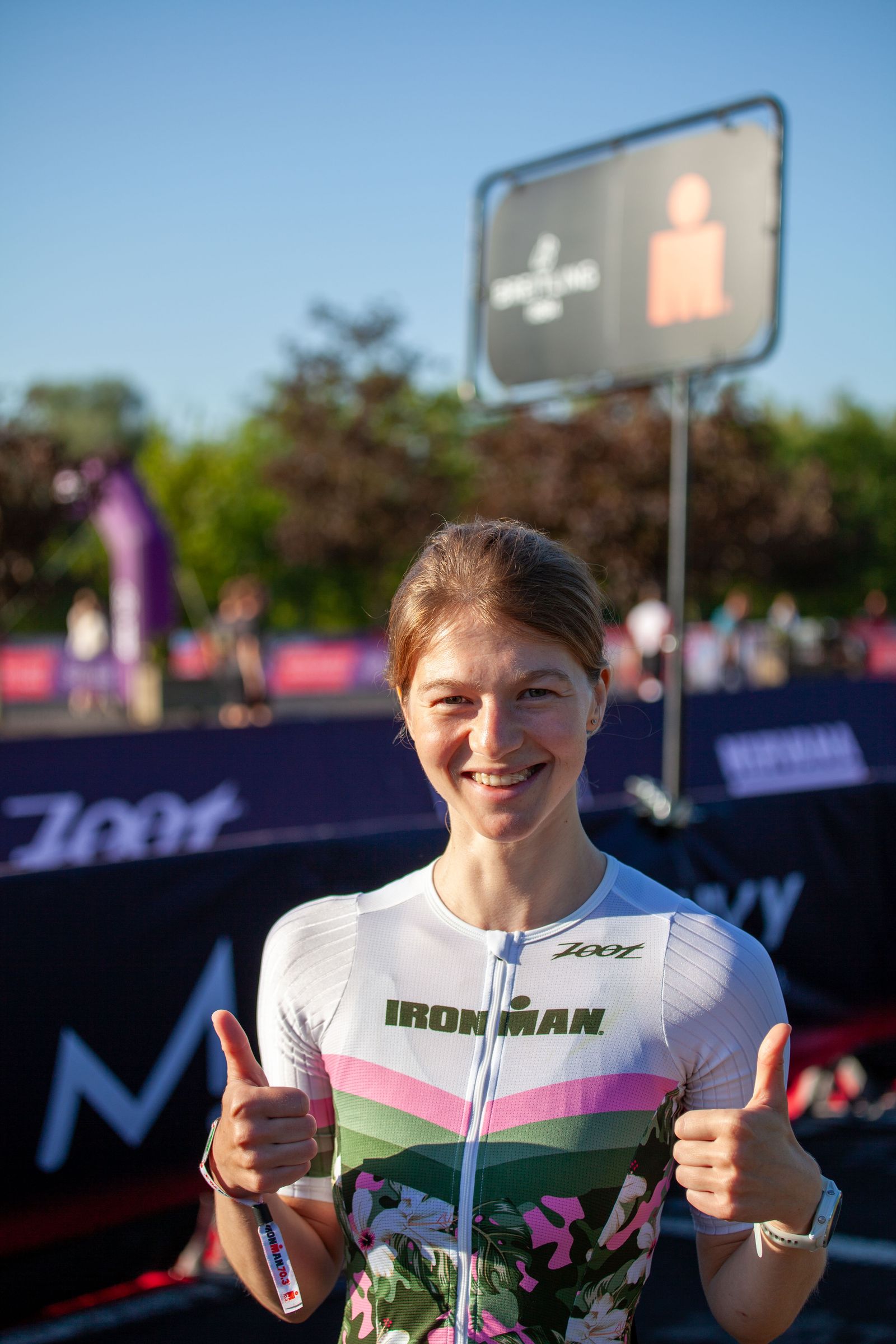
It was disappointing. The swim would have helped us stay cool for at least a while, and I had specifically wanted the experience of completing the full 70.3 distance. Instead, we spent around 1.5 hours — some people even longer — waiting at the swim start to be released in small groups.
Only two people were allowed to leave every few seconds, so the process took a long time. It was already almost 30 degrees, and there was no shade. Standing and waiting in those conditions was not how anyone had imagined starting a long-distance race.
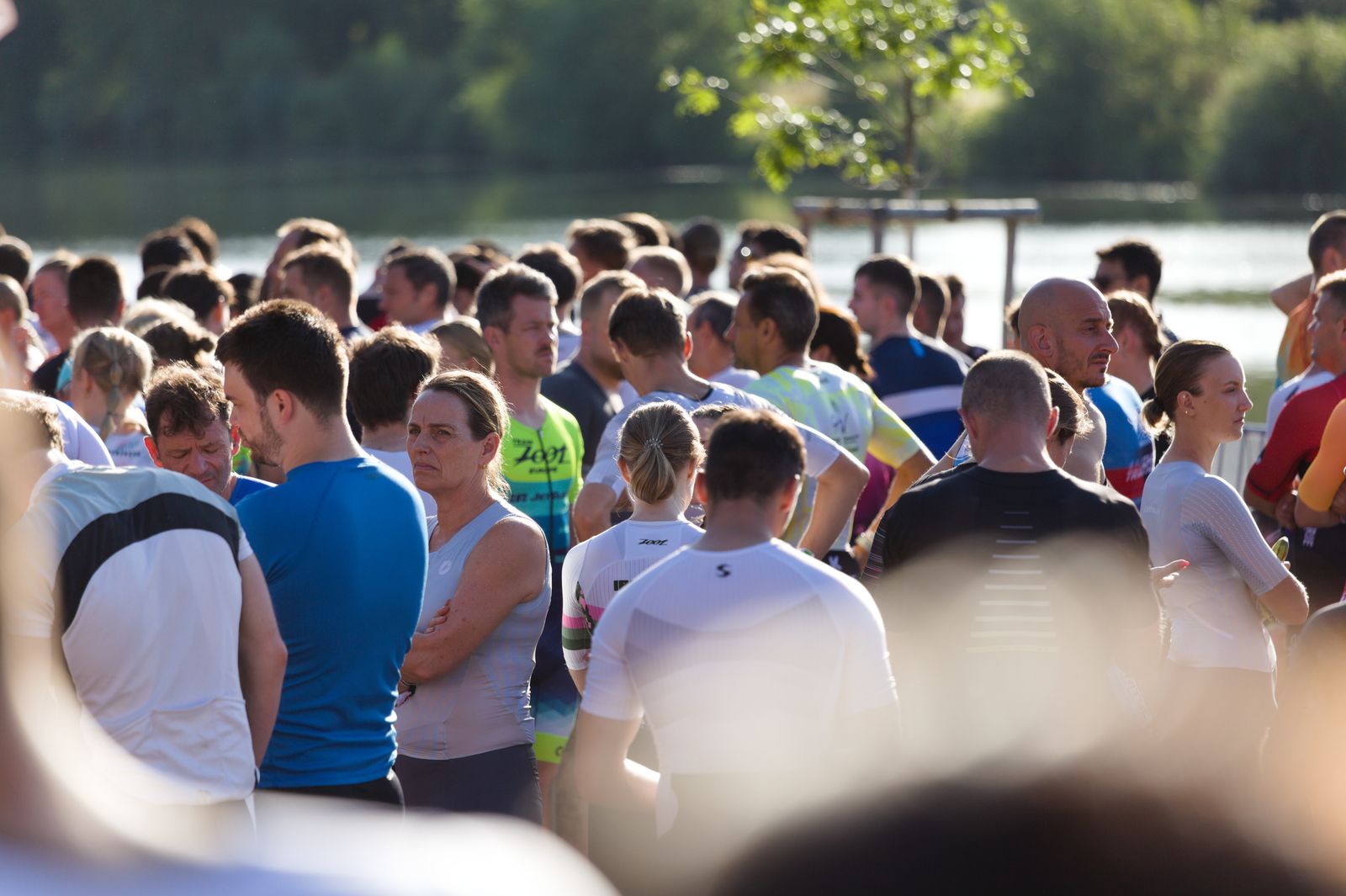
The cancellation was a safety measure because of blue-green algae, or cyanobacteria, in the Moselle. The event was converted from a triathlon into a duathlon: a 90 km bike course followed by a 21.1 km run.
It was the right decision from a safety perspective, but that didn’t make it less frustrating after months of training. I had spent so much time preparing for the swim, and suddenly the race would begin with a long wait followed by a run to transition.
Transition: Fast, But Not Counted
Once we were released, I ran to transition and collected my bike gear. The transition itself was fast — I put on my cycling equipment and headed out to the bike.
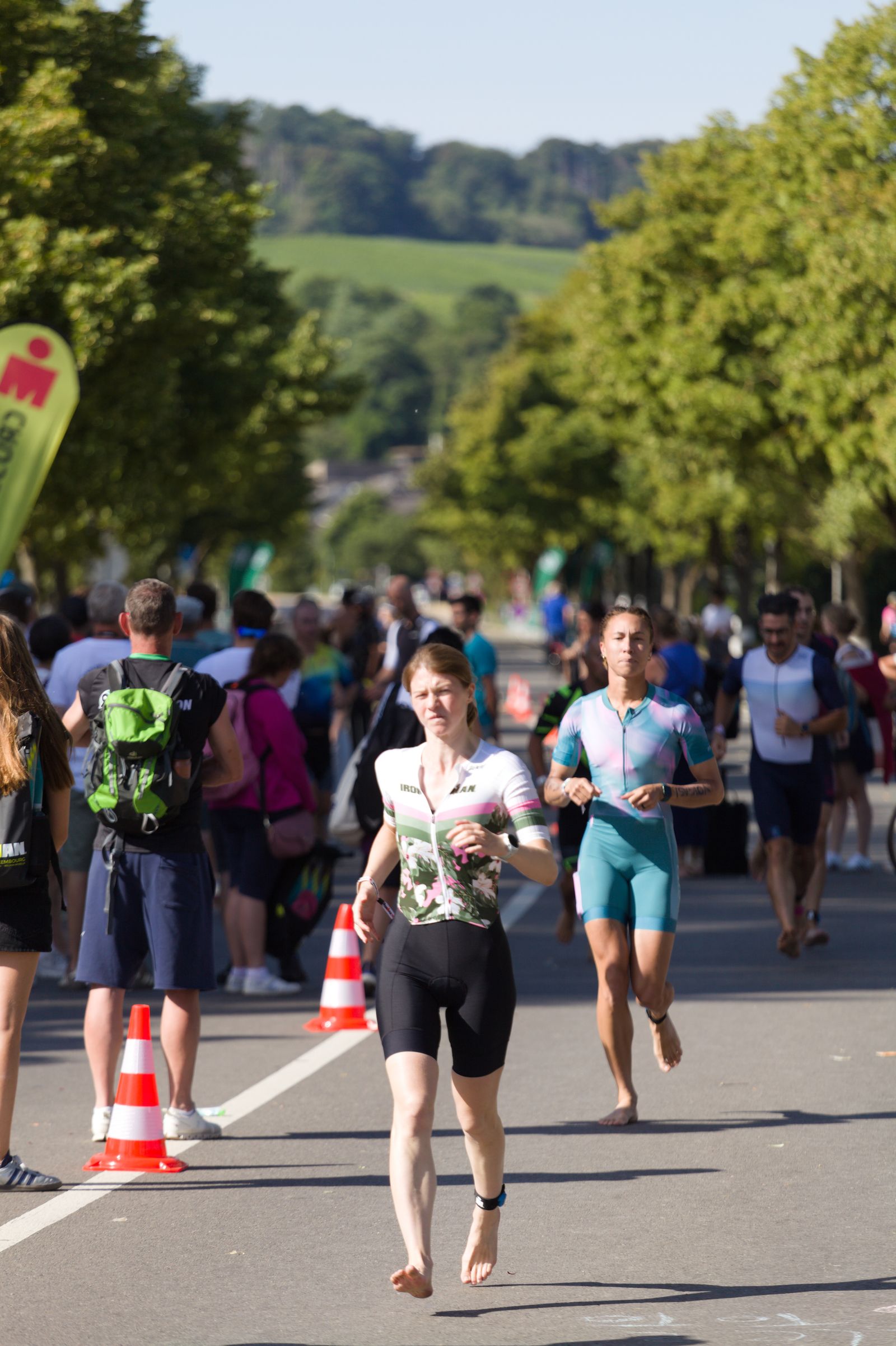
However, because we had to run from the swim start to transition in controlled groups, that part was not counted in the official results. My transitions therefore don’t appear in the final time. That is fair because everyone faced the same unusual procedure, but it also means the official result doesn’t show the full amount of time spent on course and in transition.
After the delay and the heat, I was simply happy to finally be moving.
The Bike: 90 km in 3:57
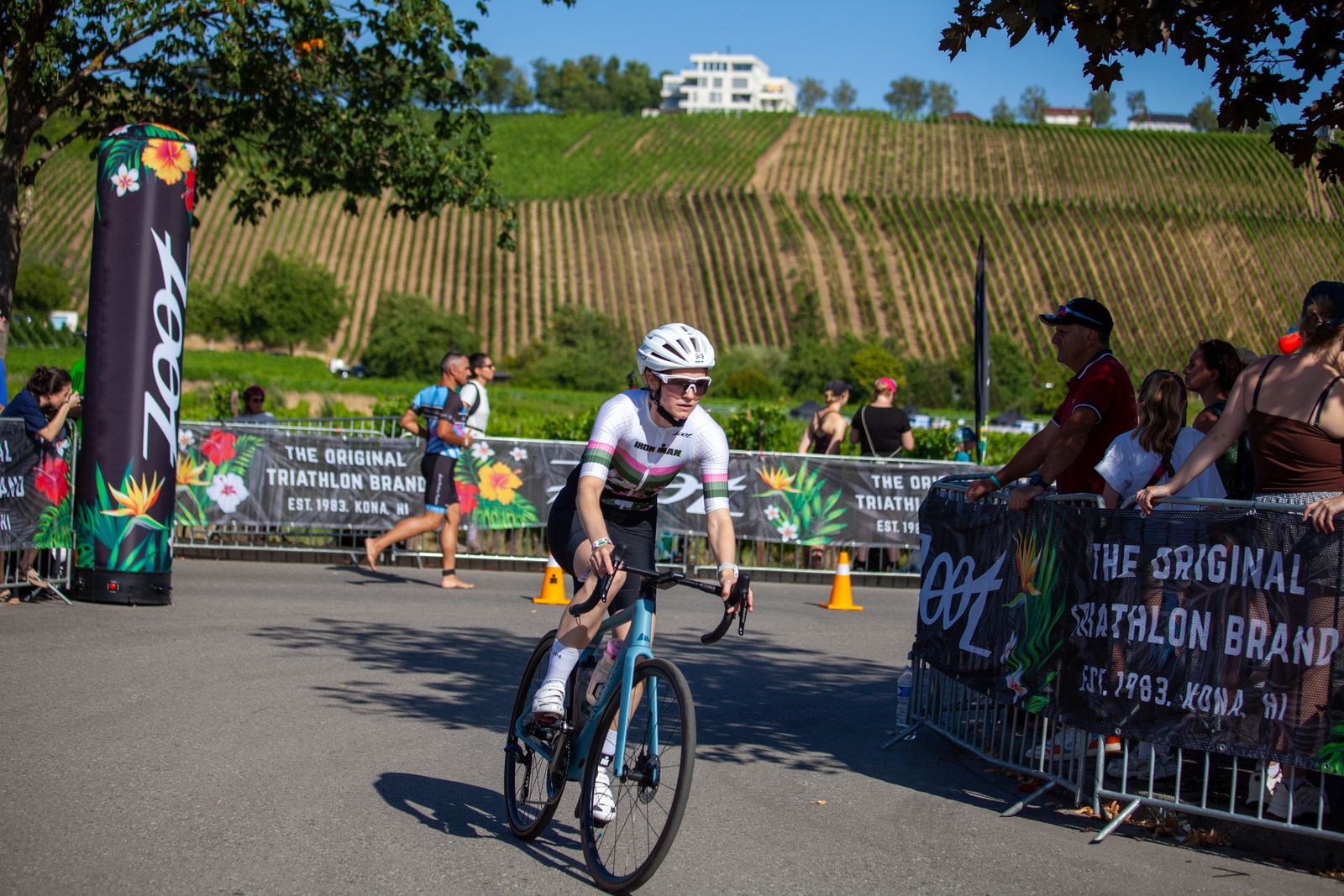
I completed the bike in 3 hours 57 minutes, averaging around 23 km/h. I was quite fast at the beginning, but the uphill sections slowed me down significantly.
The course was not flat, and the climbs made it important to manage my effort carefully. I tried not to push too hard because I wanted to keep my legs fresh for the half marathon. It was tempting to ride faster at the beginning, especially when I felt strong, but I knew that saving energy for the run would be more important than gaining a few minutes on the bike.
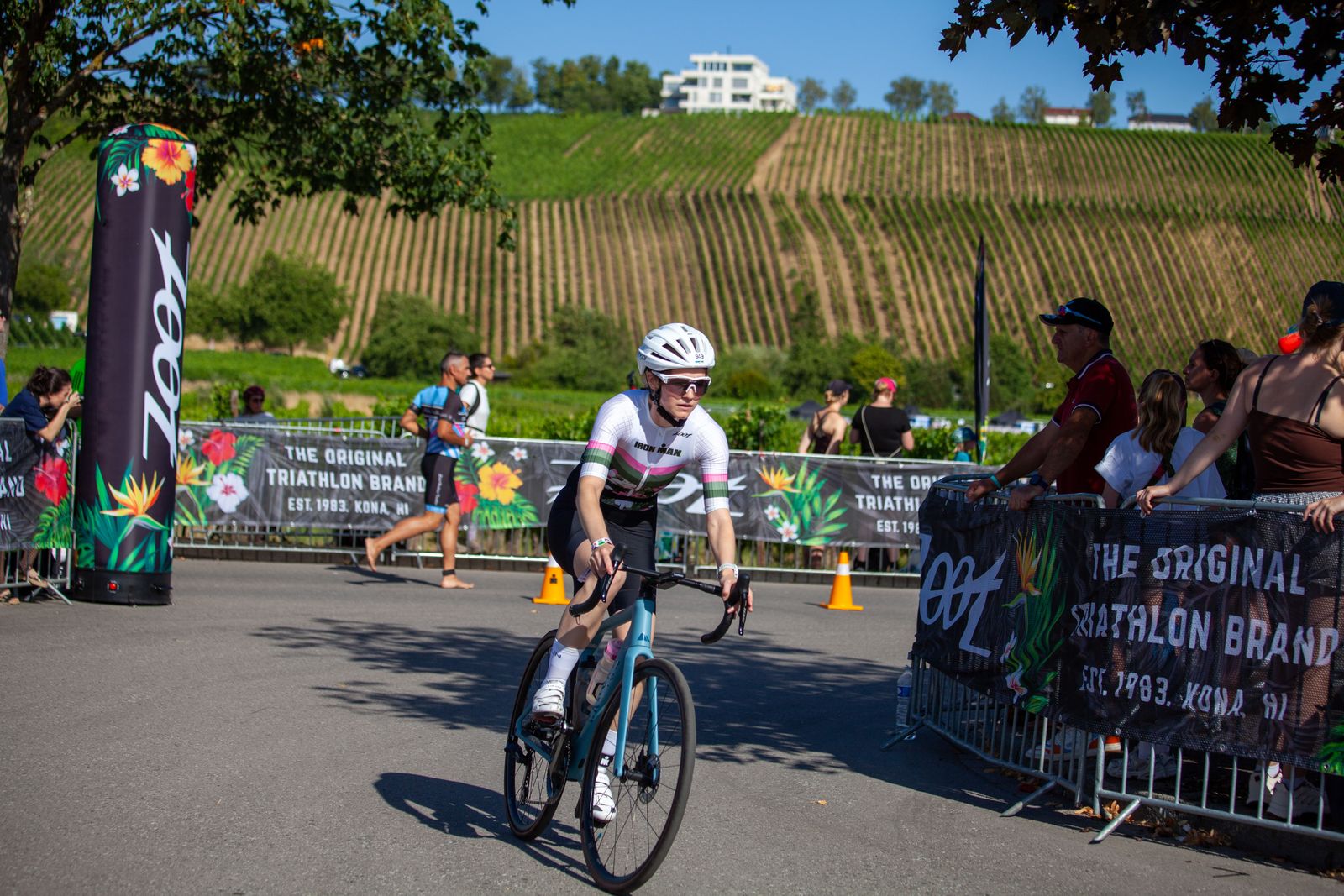
The route itself was incredibly beautiful. It passed through vineyards, included enjoyable climbs and descents, and offered views over the Moselle throughout. I really enjoyed this part of the race. The scenery made the effort feel less monotonous, and there was always something to look at as the course moved through the countryside.
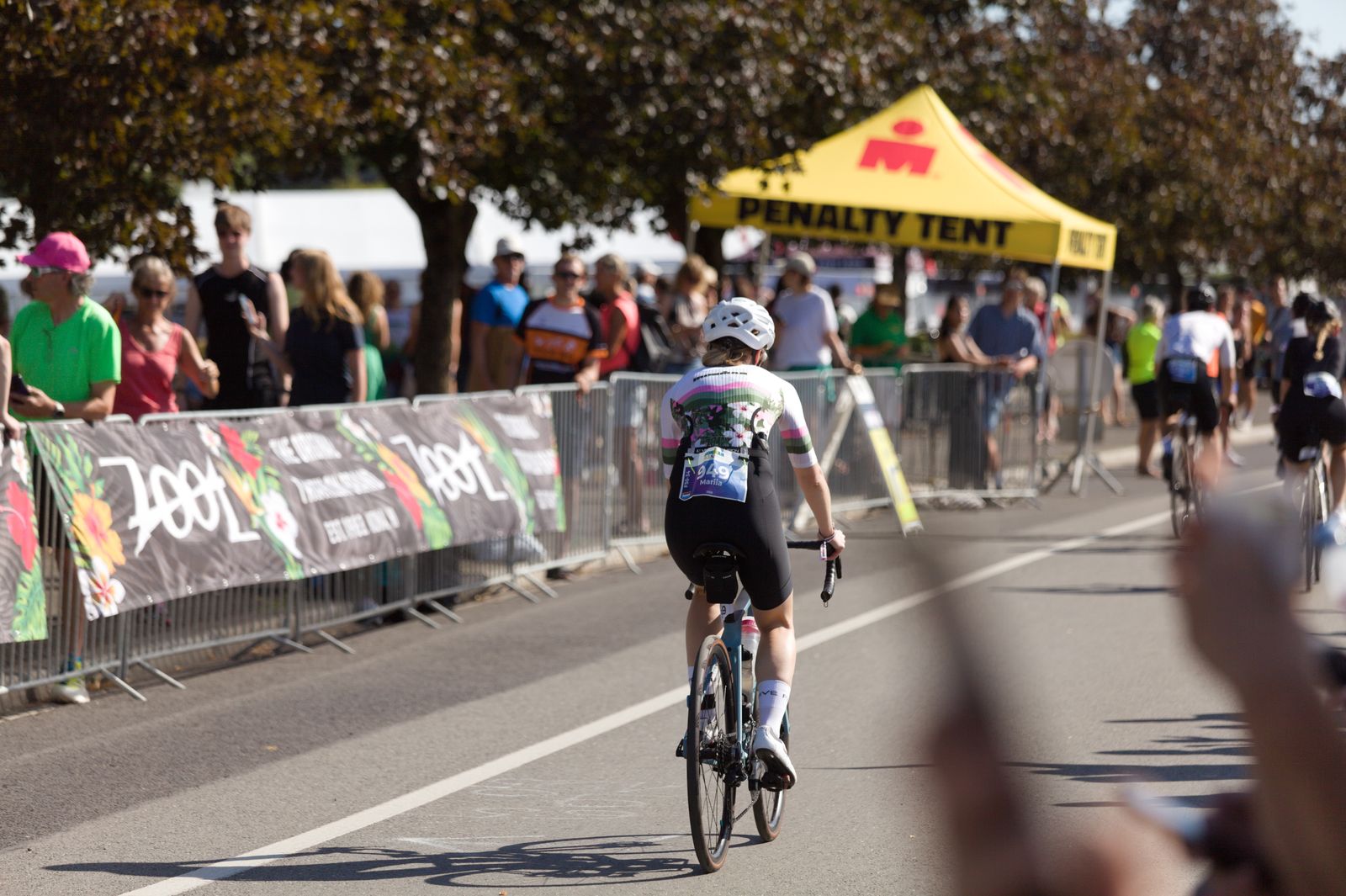
The race was also well organised. The aid stations were properly stocked, with nutrition and plenty of water in branded Ironman bottles. In such hot conditions, reliable access to fluids was essential. I focused on drinking regularly, taking nutrition, and keeping enough energy for the run.
Transition 2: 8 Minutes
I spent about 8 minutes in the second transition.
I thought I was quick, but it took longer than expected to run into transition, find my bag, change, and run back out. The distance between the bike area, the bags, and the exit added up, and there were also many small things to organise.
It was another reminder that transitions are part of the race, not just an interruption between disciplines. For my next 70.3, I would practise the process more deliberately: where to find the bag, what to take out first, what to leave behind, and how to move through the area without wasting time or energy.
The Run: Half Marathon in 2:15
The run was hard — hot and sunny, with very little relief from the conditions. But I was feeling surprisingly strong.
After the nerves before the race, the cancelled swim, the long wait, and the 90 km bike ride, I had expected to feel much worse. Instead, my legs still felt capable of running, which gave me confidence during the first kilometres.
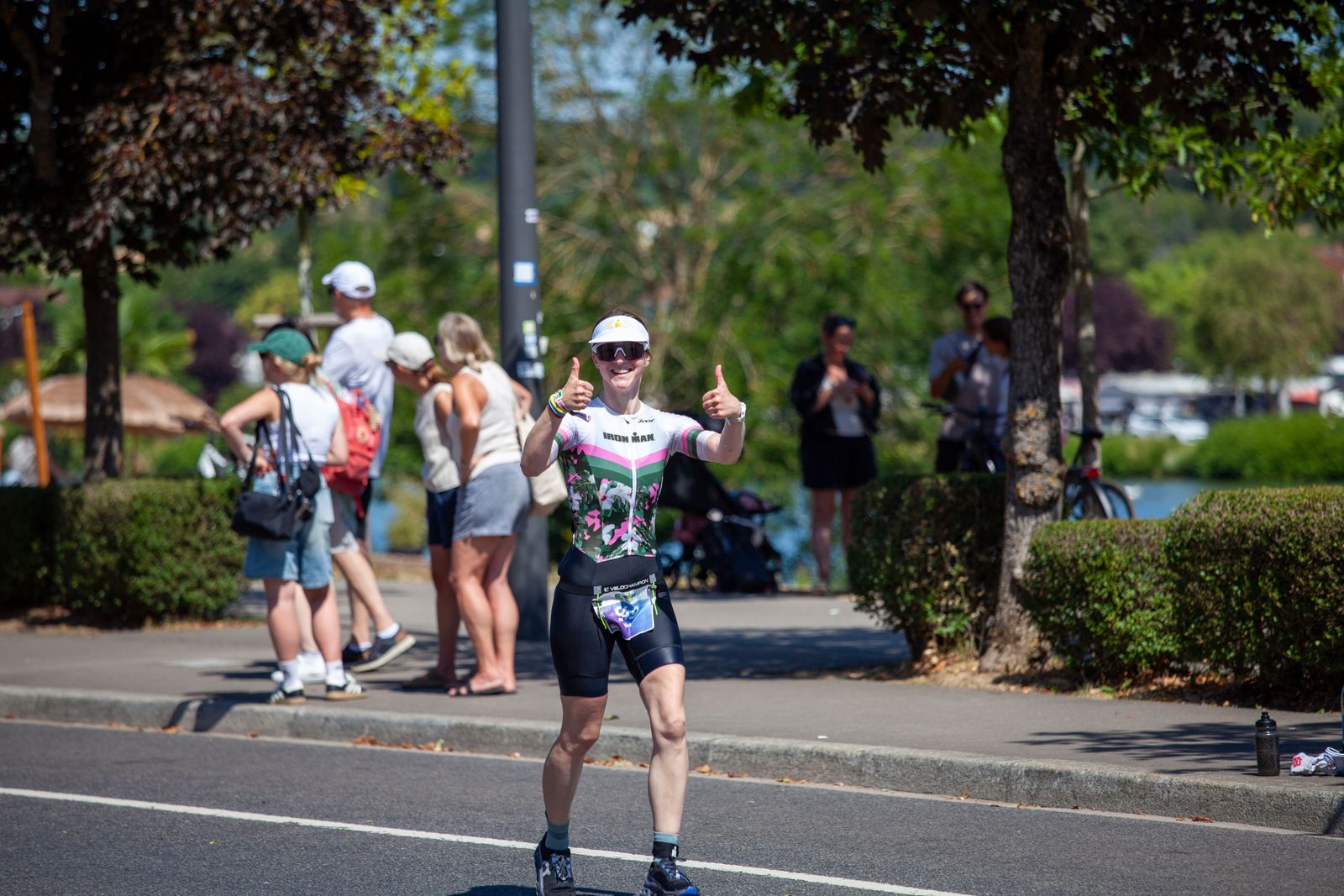
I finished the half marathon in 2 hours 15 minutes, at an average pace of 6:24 min/km. That was close to the time of my first-ever half marathon in 2017, although the comparison is not entirely fair.
A standalone half marathon and a half marathon after 90 km of cycling are completely different experiences. Add hills, direct sun, and temperatures around 30 degrees, and the effort becomes something else altogether.
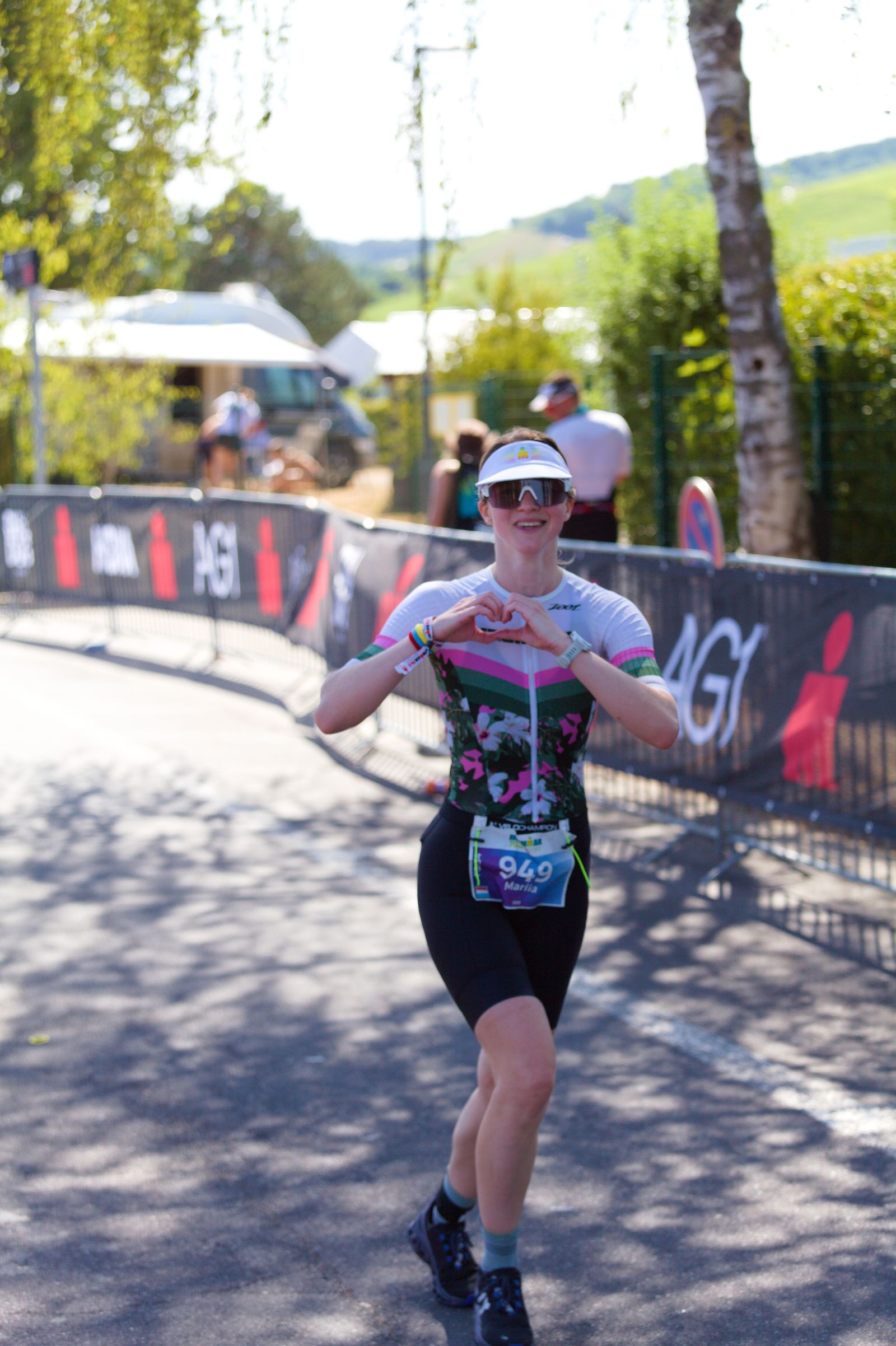
I focused on staying consistent rather than chasing a particular pace. I took water, tried to keep moving, and reminded myself that the main goal was to finish. I didn’t fall apart, I didn’t stop, and I finished feeling stronger than I expected.
That felt like a win.
The Finish: Proud and Relieved
After the cancelled swim, 90 km of cycling, and a half marathon in the heat, I finally crossed the finish line.
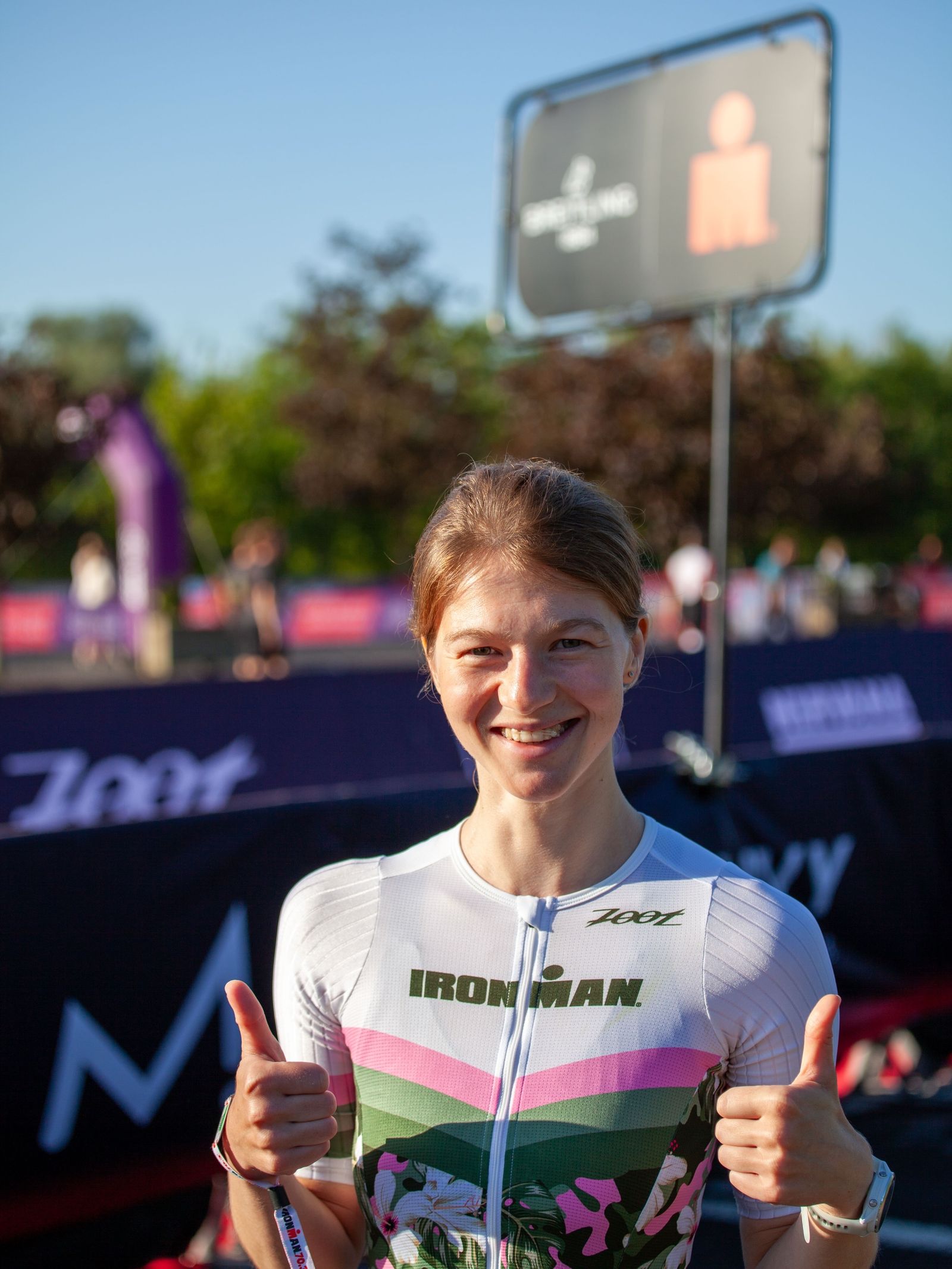
The official result was approximately 6 hours 12 minutes, excluding the transition time that was not included in the results. It wasn’t the full triathlon I had imagined, but it was still my first 70.3-distance race — and I had finished it on home soil.
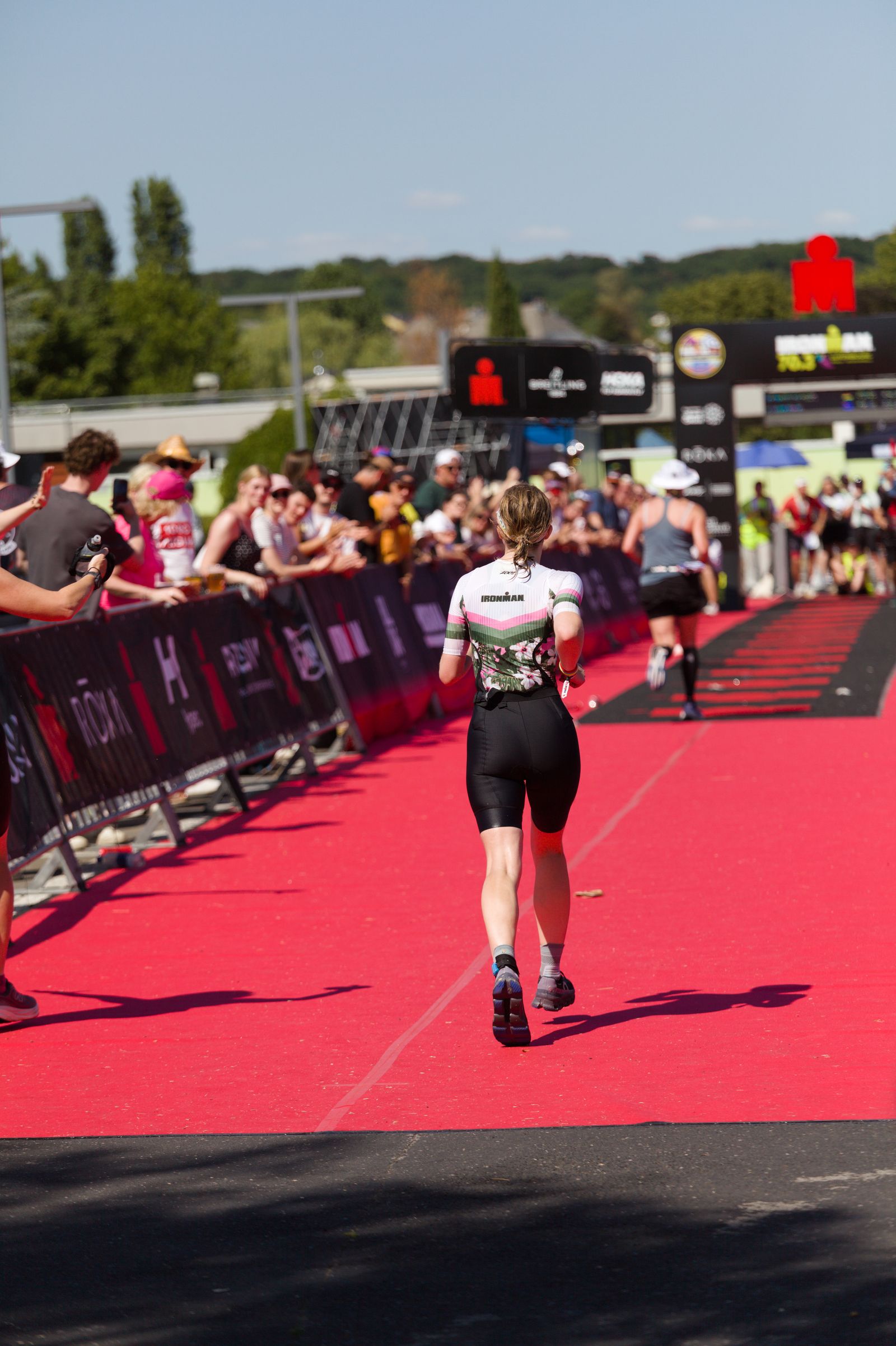
I was happy and proud of myself. After finishing, I took a shower, changed, spent some time in Remich with my partner, who had come to support me, and then went back home to recover.
Home races really are the best. There is something deeply satisfying about completing a race like this and then driving back to your own bed, your own kitchen, and your own couch. No hotel checkout, no packing up, and no travel stress — just race, recover, and slowly start processing what you have achieved.
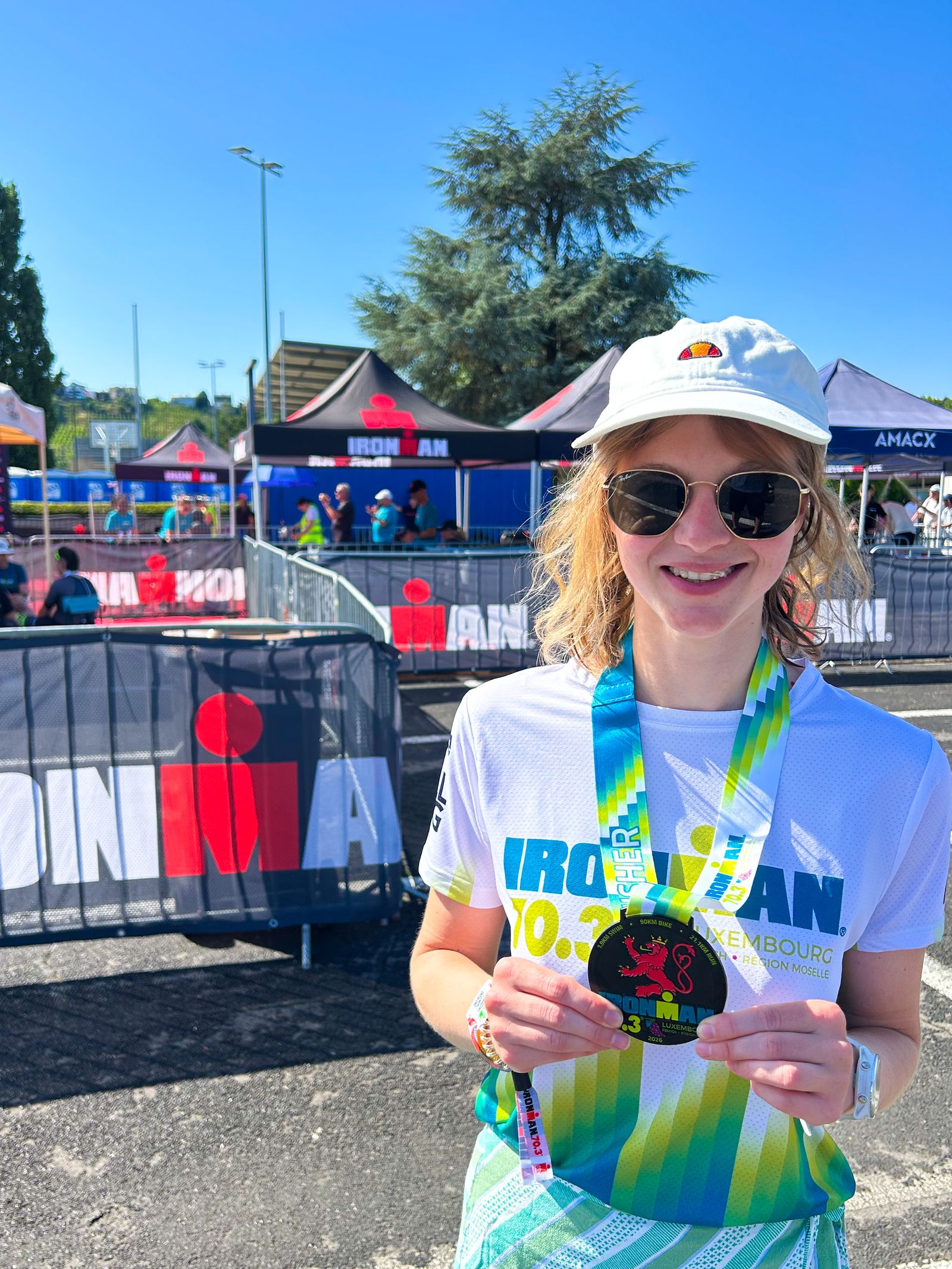
Having my partner there also made the finish more special. Endurance races contain many hours that are invisible to everyone else: early mornings, long training sessions, tired evenings, and the doubts that appear before race day. Seeing a familiar face in Remich after the finish made the whole experience feel shared rather than purely individual.
What I Learned
- Your marathon background helps, but it doesn’t prepare you for everything. I already understood pacing and discomfort. The bike, fuelling, and transitions were still new skills.
- Prepare transition bags calmly. Registering the day before gave me time to organise everything at home rather than rushing at the venue.
- Heat adaptation matters. Racing in 30+ degrees is brutal, and the heat affects pacing, hydration, nutrition, and recovery.
- Don’t push too hard on the bike. Saving something for the run paid off.
- Swim cancellations happen. It was disappointing, but the organisers made the correct safety decision.
- Transitions deserve proper practice. Eight minutes in T2 showed me that small logistical details can add up quickly.
- Home races are a gift. If you have the opportunity to race near home, take it.
Why This Mattered
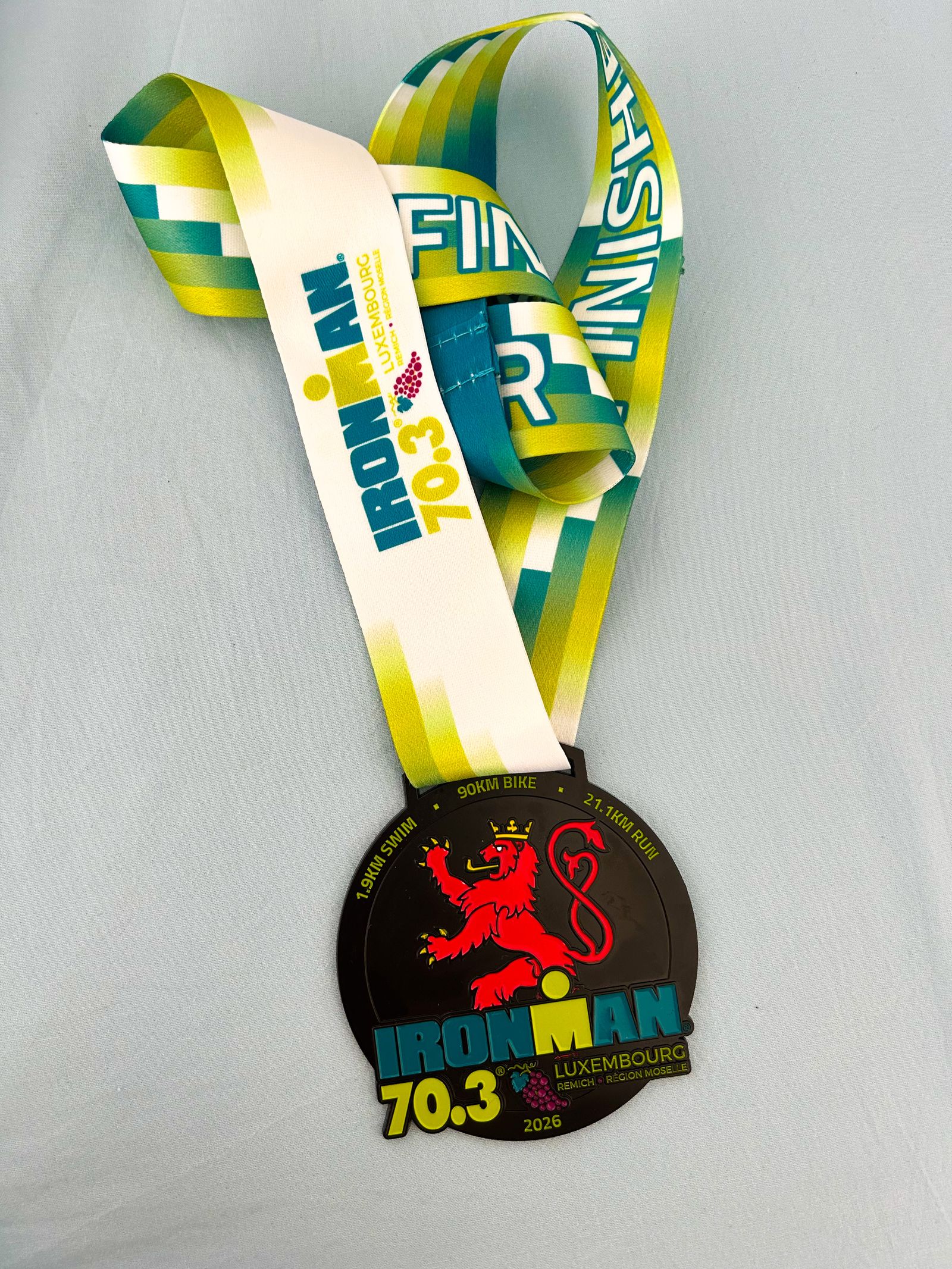
This race was the next step in my triathlon journey: from discovering the sport, to completing my first Olympic distance, to finishing my first 70.3. The swim was cancelled, and the race was far from perfect, but I adapted, completed the bike and run, and finished on home soil.
It wasn’t perfect, but it was mine. And finishing your first 70.3 in your own country, with your partner waiting at the finish and your own bed only a short drive away, is a feeling I won’t forget.